Water coming in right now?
Keep everyone away from a sagging ceiling and from wet light fittings, and turn the power off at the switchboard if you can reach it without standing in water. For storm damage, the NSW SES is on 132 500; in a life-threatening emergency, call Triple Zero (000). The roof leaking guide covers the first hour step by step.
Where roof leaks start on Northern Beaches roofs
A leaking roof rarely lets water in directly above the stain. Water gets under a tile or sheet, runs along the sarking, battens or rafters, and drops onto the ceiling wherever it finds a low point. So the first job in any leak repair is finding the real entry point. These are the usual causes.
Cracked, slipped and broken tiles
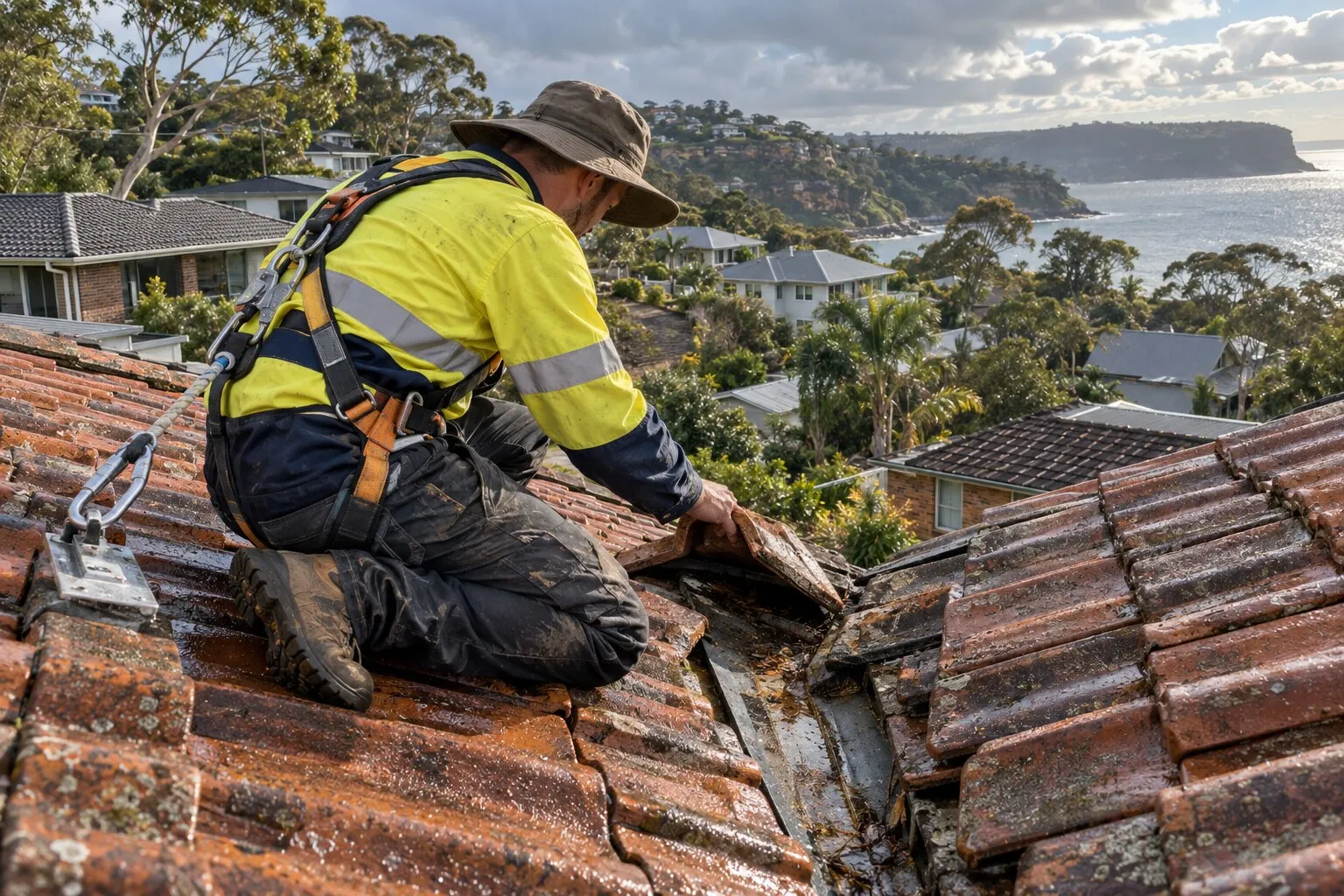
A tile cracked by a falling branch, foot traffic or age lets water onto the sarking, or straight onto the ceiling on older roofs without sarking. Tiles can also slip out of line, opening a gap in the course. The roofer replaces broken tiles with a matching profile and re-seats slipped ones.
Valleys
The metal valley where two roof planes meet carries a large share of the roof’s water. On leafy blocks, leaves pile up in the valley, hold moisture against the steel and dam the water so it spills over the edge of the valley and under the tiles. A rusted-through valley is usually replaced, not patched.
Flashings around chimneys, skylights and walls
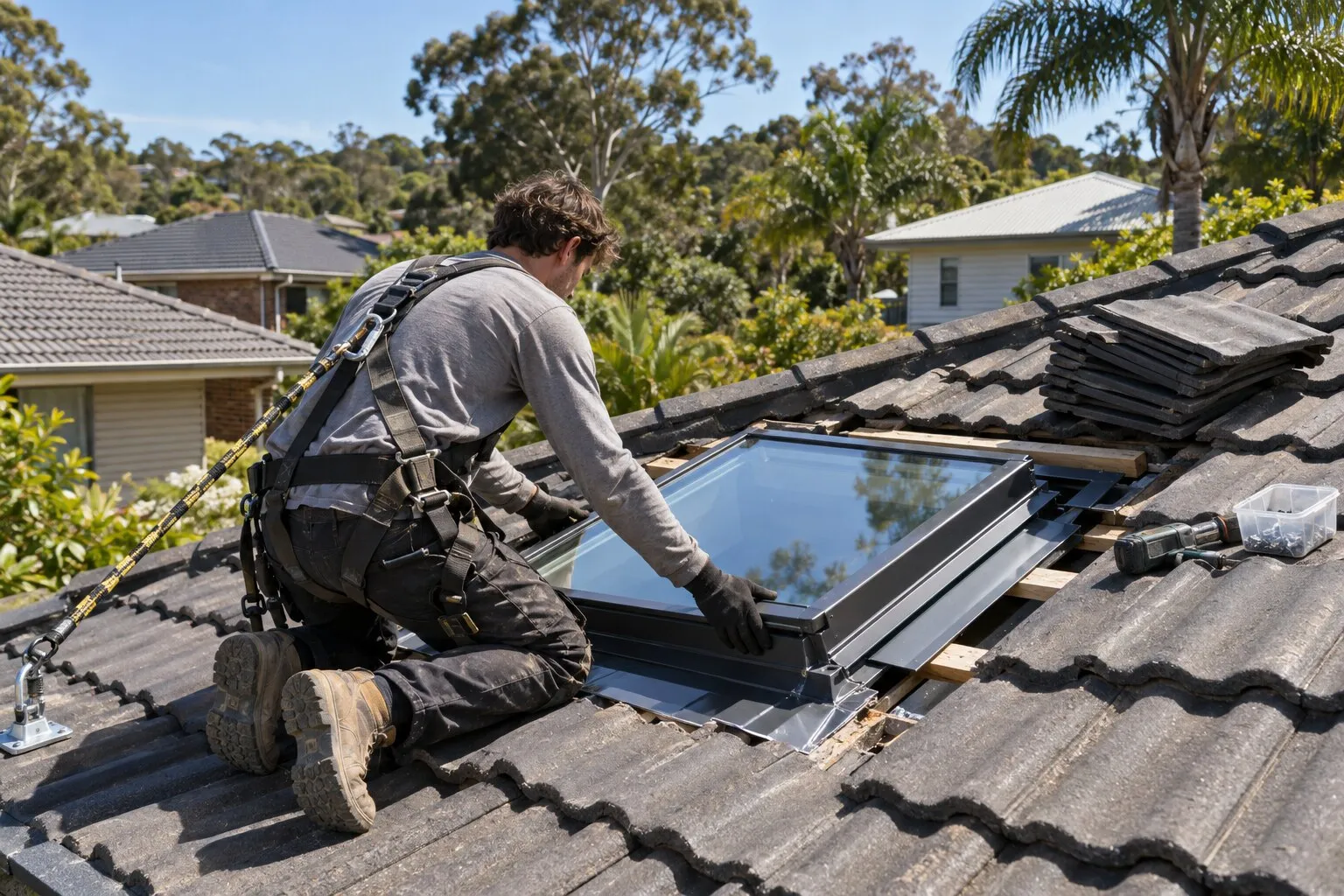
Flashings seal the joins where the roof meets a chimney, a skylight, a vent pipe or a wall. When they lift, crack or corrode, or the sealant behind them dries out, water runs straight in, often showing up as a damp patch beside the chimney breast or a drip from the skylight shaft.
Ridge capping and pointing
The capping along a tile roof’s ridges and hips sits on a mortar bed sealed with pointing. Once the old pointing cracks and drops out, wind-driven rain gets in under the caps. Repointing or rebedding the ridge fixes it; see ridge capping repairs.
Blocked gutters overflowing under the eaves
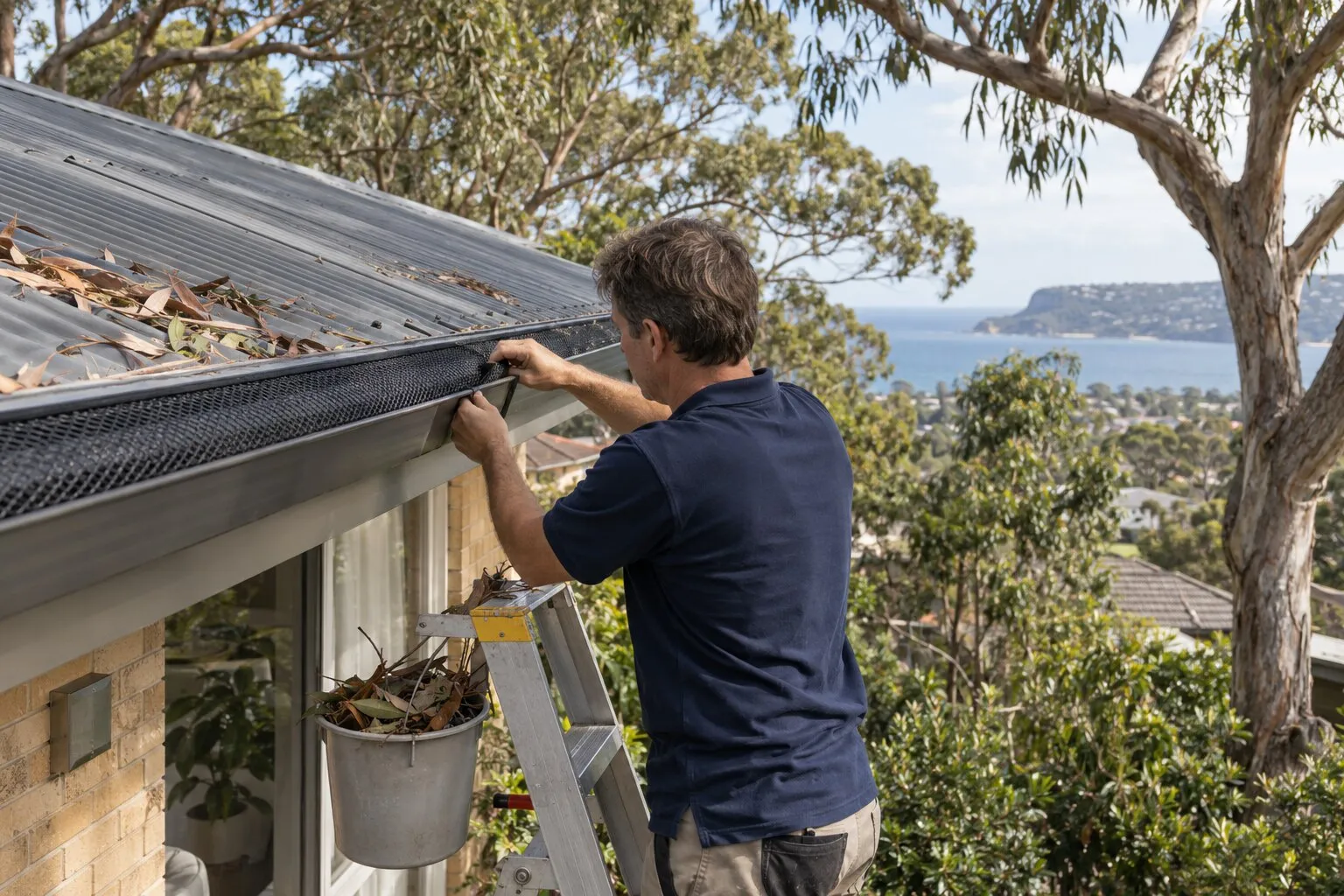
Not every leak is a roof fault. The NSW SES says to clear gutters, downpipes and drains regularly, because “Blockages can trap water and cause it to overflow under the eaves into your roof cavity.” Water that appears along an outside wall or at the edge of a ceiling after heavy rain is often this.
Metal roofs: screws, laps and sheets
On Colorbond and older iron roofs, leaks usually start at loose or rusted screws, at the laps where sheets overlap, and around penetrations. The NSW SES’s advice on preparing your home says to “Look for any leaks and repair any damage to your roof, including loose tiles, metal sheets and screws.”
How a roofer traces a leak
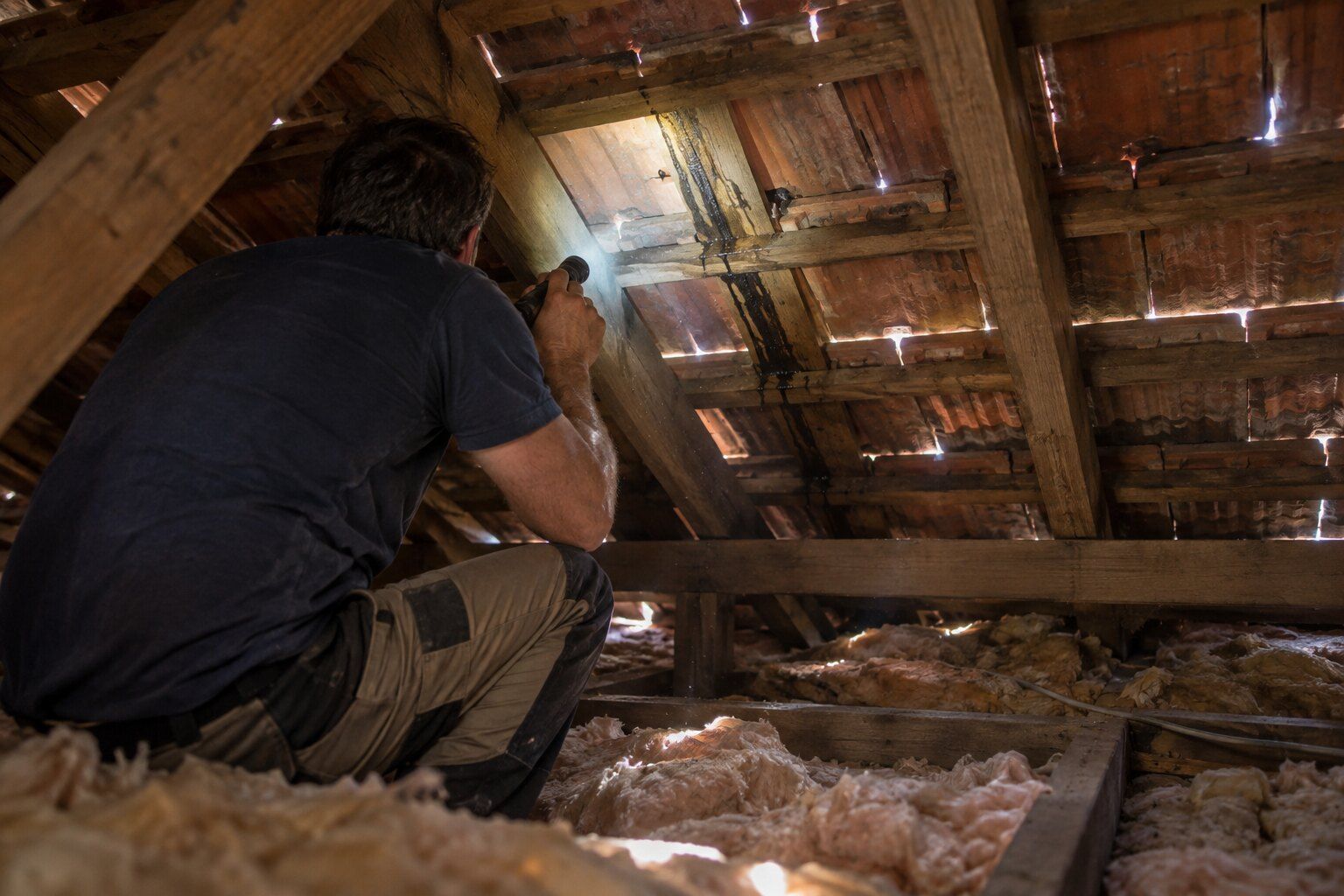
A careful leak repair starts inside. The roofer goes into the roof cavity with a torch, follows the damp streaks and water marks on the timbers and sarking back uphill to where the water first appears, and looks for daylight through tiles or around penetrations. Then they check the same spot from the roof: the tiles, valley, flashing or screws directly above.
If the leak only shows in wind-driven rain, the roofer may run water over one section of the roof at a time, from the bottom up, while someone watches inside. That isn’t done on fibro: SafeWork NSW warns that using a garden hose with a trigger attachment on asbestos roofs and gutters “can be a high-risk activity”.
Temporary fix or permanent repair
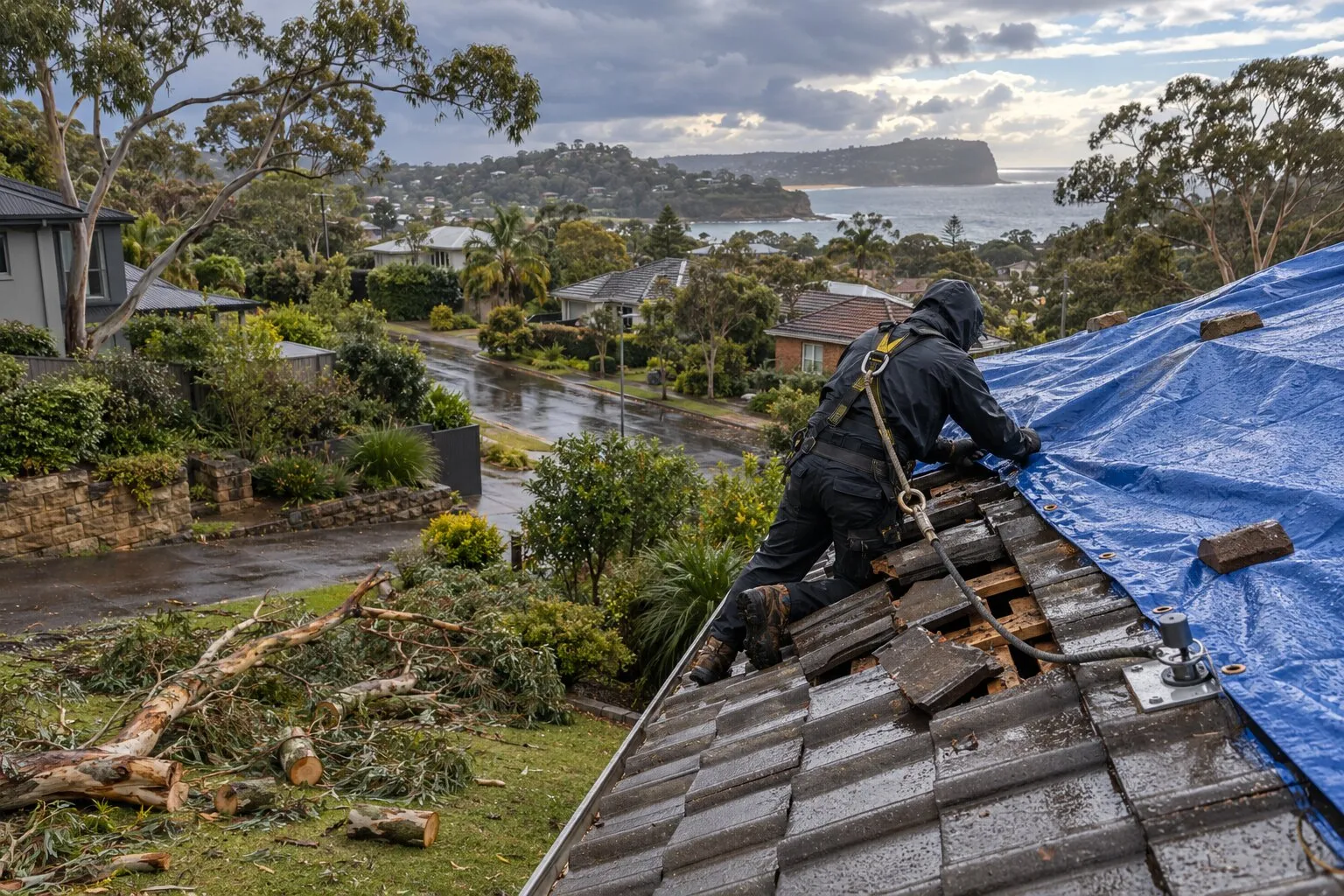
When water is pouring in during a storm, the first job is a make-safe: a tarp, a temporary tile or a sealant patch to keep the rain out until the roof is dry enough to work on properly. That’s a stopgap. The permanent repair deals with the cause: new tiles, a new valley, rebedded and repointed ridges, a replaced flashing, new screws and sheets, or cleared and repaired gutters. For storm damage, see emergency roof repairs and storm damage.
Photos for your insurer
If the leak follows a storm, take photos before anything is moved or fixed: the ceiling stain, the water on the floor, damaged belongings, and anything you can see on the roof from the ground. Ask the roofer for photos of what they find up there too. The NSW SES says that if your property is damaged, “contact your insurer as soon as possible to lodge a claim”. What your policy covers is a question for your insurer.
Roof leak repair prices
We found no Northern Beaches roofer that publishes a price for leak repairs on their own. These are published repair figures from Sydney contractors’ pages written for Mona Vale, Manly and the Beaches, plus one Northern Beaches contractor’s storm repair prices, which include a small leak. The roofer prices your repair once they’ve found the cause.
Published roof repair prices
| What’s charged | Published price | Who publishes it |
|---|---|---|
| Simple jobs: a few cracked tiles, a section of ridge, a flashing resealed | $300 to $800 | Crown Roofers, Mona Vale page (undated) |
| Larger scopes: multi-leak diagnosis, full ridge re-bed, storm damage across several sections | $1,500 to $3,500 | Crown Roofers, Mona Vale page (undated) |
| Roof repairs on the Northern Beaches | from $700 | Aussie Roof Repairs, Northern Beaches page (undated) |
| On-the-spot roof repairs | $350 to $400 | North Shore Roof Repairs, Manly page (undated) |
| Valley replacement, per valley | $1,200 to $1,500 | North Shore Roof Repairs, Manly page (undated) |
Sydney roofing contractors’ pages written for Mona Vale, Manly and the Northern Beaches, checked 1 October 2026. All three are undated, none says whether GST is included, and the Mona Vale page uses the same wording as the company’s pages for other suburbs. They’re per job.
Storm repairs: a Northern Beaches contractor’s published prices
| What’s charged | Published price | Who publishes it |
|---|---|---|
| Minor storm repair: small leak, flashing, a few tiles or fixings | $300 to $1,000 | Cloud9 Roofing, Northern Beaches |
| Partial roof repair: several damaged areas, repointing, sheet or tile replacement | $5,000 to $12,000 | Cloud9 Roofing, Northern Beaches |
A Northern Beaches roofing contractor’s storm-damage page (published 30 April 2026), checked 1 October 2026. It describes these as indicative, gives “Emergency make-safe” as “Varies by urgency and access”, and doesn’t say whether GST is included.
Two storeys, a steep pitch or hard access add to most of these. The roof repair cost guide covers what a repair quote should list.
Who can fix a roof leak
NSW Fair Trading says you must hold a contractor licence to “carry out, advertise or contract for” building or trade work valued at more than $5,000 in labour and materials, including GST. The category depends on where the leak is:
- Roof tiling covers tiles, tile bedding and pointing, flashing valleys, sarking and battens.
- Roof plumbing covers metal roof coverings, guttering, downpipes and roof flashings.
- Both include putting in skylights and ventilators.
Many leak repairs come in under $5,000, but it’s still worth asking which licence the roofer holds. You can check it on the Service NSW licence register.
Please stay off the roof
We’d rather you didn’t climb up to look for the leak, especially while it’s wet. SafeWork NSW treats work with a risk of a fall of more than 2 metres as high-risk construction work, and warns that asbestos cement roofs “can be brittle, making them easy to fall through”. Look from the ground, or from inside the roof cavity.
What to have ready
- Where the water shows inside, and photos of the stain or drip
- When it leaks: every time it rains, only in heavy rain, or only in wind from one direction
- What the roof is made of, roughly how old it is, and whether it’s single or two storey
- Anything nearby: a chimney, skylight, solar panels or a big tree over the roof
- Whether it followed a storm and you’re claiming on insurance
- Whether the home is a strata unit or rented: see strata roof leaks or a roof leak in a rental for who arranges the repair
Common questions
How much does it cost to fix a roof leak?
A Sydney roofing contractor’s Mona Vale page publishes $300 to $800 for simple jobs, such as a few cracked tiles or a resealed flashing, and $1,500 to $3,500 for larger scopes, including diagnosing several leaks. Separately, a Northern Beaches roofing contractor publishes $300 to $1,000 for a minor storm repair, including a small leak. See roof repair cost.
Why does my roof only leak in heavy rain or strong wind?
Wind can drive rain sideways under cracked ridge pointing, lifted flashings and slipped tiles that shed ordinary rain. Heavy rain also shows up blockages: the NSW SES warns that blocked gutters, downpipes and drains “can trap water and cause it to overflow under the eaves into your roof cavity”. A roofer looks for both.
Can I just seal the leak with silicone?
As a stopgap, a roofer sometimes will, but sealant smeared over a cracked tile, a rusted valley or a gap in the flashing doesn’t fix the cause, and it can trap water or hide the real entry point. We’d rather you didn’t go up on the roof to do it yourself.
Is a roof leak covered by insurance?
That depends on your policy and on what caused the leak, so ask your insurer. After storm damage, the NSW SES says to “contact your insurer as soon as possible to lodge a claim”. Photograph the ceiling, the water and any damage you can see from the ground before anything is moved or fixed.
Does a roof leak repair need a licensed roofer?
In NSW, work worth more than $5,000 in labour and materials, including GST, must be done under a contractor licence in the right category: roof tiling for tiles, valleys, bedding and pointing; roof plumbing for metal roofs, gutters, downpipes and flashings. Many leak repairs cost less than that, but it’s still worth asking which licence the roofer holds and checking it on the Service NSW licence register.
Where these figures come from
The prices, rules and official advice on this page come from these published pages, checked on 1 October 2026.
- Crown Roofers: roof repairs Mona Vale · Sydney-wide roofing contractor, Mona Vale suburb page, undated
- Aussie Roof Repairs: roof repairs Northern Beaches · Sydney roofing contractor (Oatley), Northern Beaches page, undated
- North Shore Roof Repairs: Manly · Sydney roofing contractor (Ryde), Manly service-area page, undated
- Cloud9 Roofing & Guttering: storm damage roof repair Northern Beaches · Northern Beaches roofing contractor (2099), published 30 April 2026
- NSW SES: prepare your home · NSW State Emergency Service guidance
- NSW SES: during a storm · NSW State Emergency Service guidance, undated
- Northern Beaches Council: East Coast Low, get prepared · Local council news item, 2 July 2025
- SafeWork NSW: Code of Practice, managing the risk of falls in housing construction · NSW work health and safety regulator, approved code of practice, August 2019 edition
- SafeWork NSW: managing risks of exposure to asbestos · NSW work health and safety regulator, updated 30 June 2025
- NSW Government: roof tiling work licence · NSW Fair Trading licence page, updated 23 June 2026
- NSW Government: roof plumbing work licence · NSW Fair Trading licence page, updated 23 June 2026
- Service NSW: check a trade licence · NSW Government licence register
Related guides
- Strata roof leaks in NSW: who’s responsibleWho repairs a strata roof, how to report a leak, emergency repairs and refunds, and what to do if it isn’t fixed.
- Roof leaking in a rental in NSWWhy a serious roof leak is an urgent repair, what tenants do first, the $1,000 rule, landlords’ duties and strata rentals.
- Roof leaking? What to do firstKeeping safe, protecting the ceiling, who to call in a storm, finding where the water gets in, and insurance photos.
- Skylight and box gutter leaks: causes and fixesLeak or condensation, flashings and leaf litter, blocked box gutter outlets and overflows, who fixes them and repair prices.