The short answer
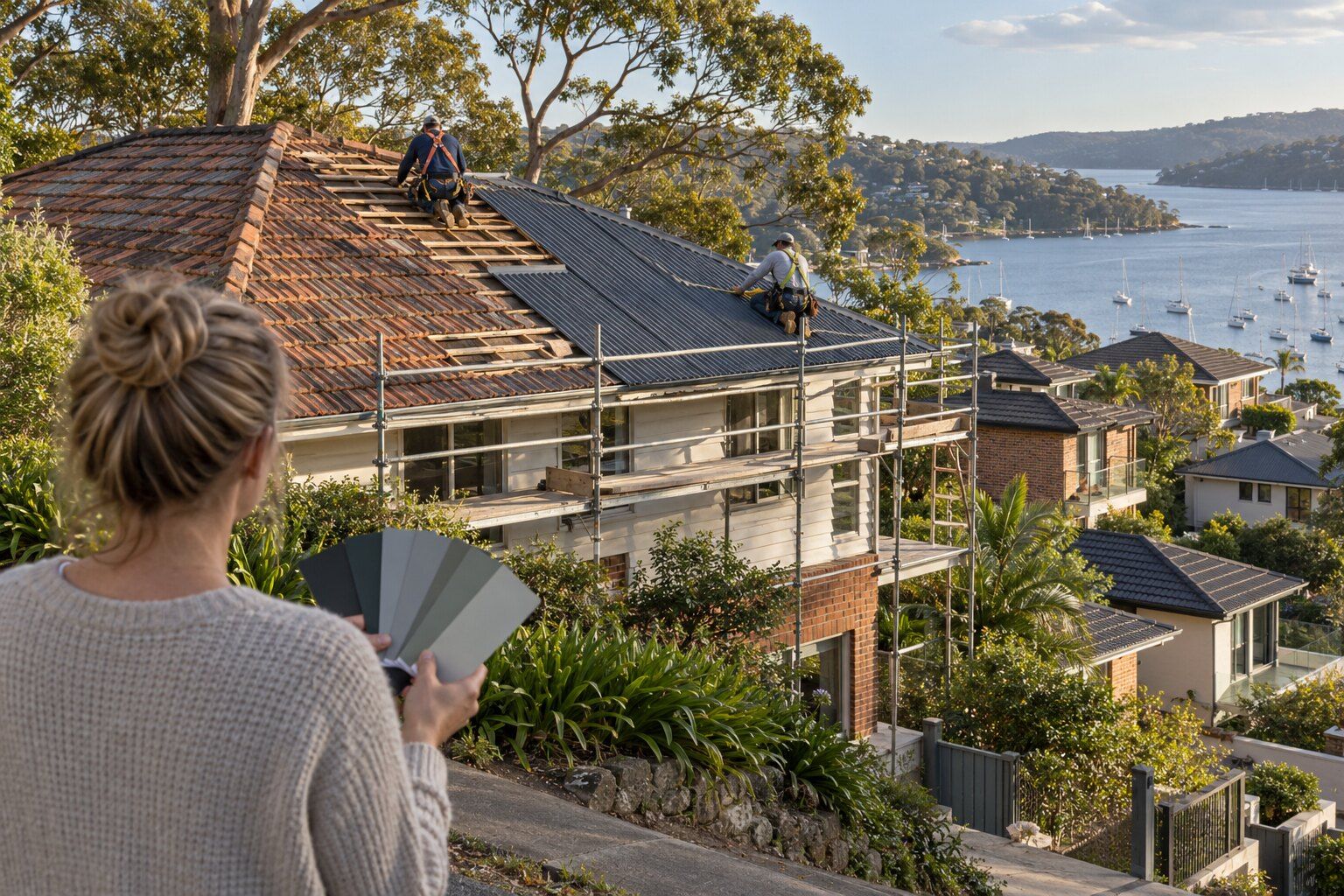
Usually not, for a like-for-like re-roof of a one or two storey house. NSW’s Codes SEPP makes replacing roof cladding exempt development, which needs no council approval, if the house isn’t a heritage item or in a heritage conservation area and the work meets its standards: no new or bigger openings such as skylights, no reduced fire resistance, no combustible cladding, and ember sealing with equivalent or better materials on bush fire prone land. A heritage home, a change to the roof’s shape, pitch or height, or structural work needs approval. The councils’ colour rules, including Pittwater’s ban on white, light, red and orange roofs, are applied when the work needs approval. These are the rules as at October 2026; a single Northern Beaches plan is expected in mid-2027.
When a re-roof doesn’t need council approval
Clause 2.53 of the Codes SEPP lists “the repair to or replacement of a non-structural wall or roof cladding” as exempt development “if it is not constructed or installed on or in a heritage item or a draft heritage item or in a heritage conservation area or a draft heritage conservation area”. Clause 2.54 then sets standards the work must meet:
Codes SEPP clause 2.54: standards for exempt re-roofing
| Standard | What the clause says |
|---|---|
| Openings | “not comprise the making of, or an alteration to the size of, any opening in a wall or roof, such as a doorway, window or skylight” |
| Fire resistance | “not reduce the existing fire resistance level of a wall or roof” |
| Bush fire prone land | “be adequately sealed or protected to prevent the entry of embers” and “use equivalent or improved quality materials” |
| Type of building | “not be carried out on any building other than a 1 or 2 storey dwelling house, attached development or detached development” |
| Cladding | “not involve the use of external combustible cladding” |
State Environmental Planning Policy (Exempt and Complying Development Codes) 2008, clause 2.54, in the version in force from 12 December 2025. The building-type and combustible-cladding standards are written for work that “involves cladding”; our reading is that they cover roof cladding.
Exempt work must also meet the Building Code of Australia, be installed to the manufacturer’s instructions, and not involve removing more than 10 m² of bonded asbestos, or any friable asbestos, unless a licensed asbestos removalist does it (clause 1.16). Exempt development needs no development consent and no construction certificate (clause 1.15). Northern Beaches Council says that when a project meets the standards, “approval from Council may not be needed”.
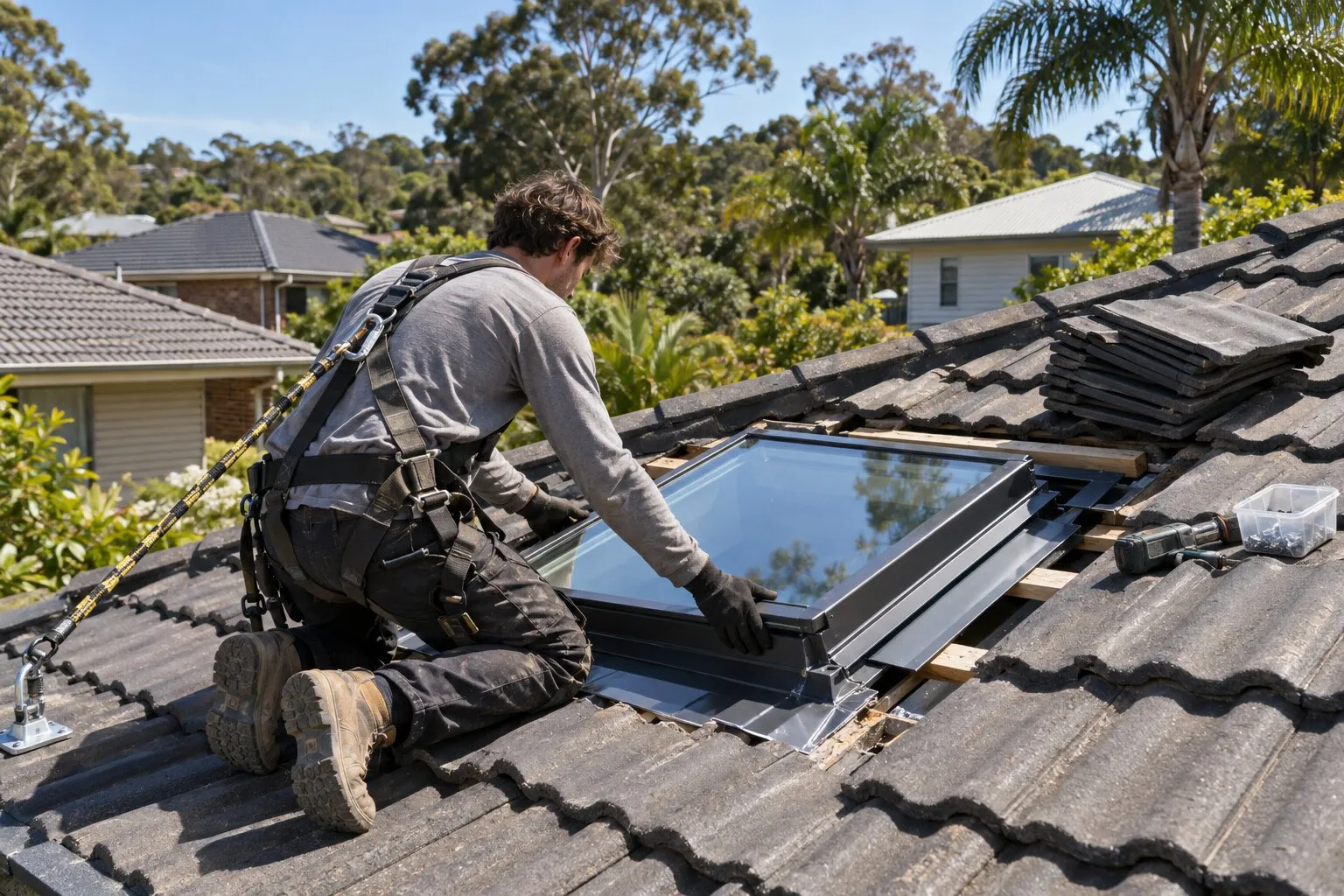
Changing material, say from concrete tiles to Colorbond, isn’t excluded by the clause’s wording. A new skylight is: it has its own exempt rules, in our skylight guide.
When replacing a roof needs a DA or a CDC
- A heritage item, or a home in a heritage conservation area (or a draft one). Council’s heritage FAQ says: “If you wish to repair, change or renovate your heritage-listed property you need to lodge a development application.” Sympathetic work “may mean retaining the form and architectural style of the building, such as the original roof pitch, materials, window placement, setback and colour.”
- A change to the roof’s shape, pitch or height. That’s no longer a minor, non-structural alteration. Outside a conservation area, the Housing Alterations Code allows external alterations as complying development, approved by council or a private certifier; its standards include no increase in the building’s height and no “more than a 5% change in the pitch of the roof”. Beyond that, it’s a development application.
- Structural work, such as new rafters or reframing, by our reading of the words “non-structural … roof cladding”.
- A building that isn’t a one or two storey house, attached or detached development, such as an apartment block (our reading of clause 2.54).
Your section 10.7 planning certificate, or council’s property search, shows whether your home is a heritage item or in a conservation area. Council’s planning line is 1300 434 434.
Roof colour rules: Pittwater, Warringah and Manly
The Northern Beaches still has three sets of planning controls, from the former Pittwater, Warringah and Manly councils, and each development control plan (DCP) treats roof colour differently. These are their roof colour controls, read on council’s planning viewer on 22 October 2026:
Roof colour controls in the three Northern Beaches DCPs
| Plan | What it says about roof colour |
|---|---|
| Pittwater 21 DCP (Avalon Beach, D1.5; similar clauses in every locality but the national park) | “External colours and materials shall be dark and earthy tones”; “White, light coloured, red or orange roofs and walls are not permitted”; “Finishes are to be of a low reflectivity.” |
| Warringah DCP 2011 | “Roofing materials should not cause excessive glare and reflection”, suggesting “medium to dark roof tones”; near bushland, waterways or the beach, colours and materials “must blend in to the natural landscape”. |
| Warringah DCP 2011, Freshwater Village study area | “Lighter roof colours are preferred” |
| Manly DCP 2013 | “The reflectivity of roofs and glass used on external walls will be minimal”; “Lighter colours are preferred for wall and roof materials.” |
| Manly DCP 2013, Foreshore Scenic Protection Area | “use building materials of a non-reflective quality and be of colours and textures that blend with the prevailing natural environment” |
Pittwater 21 DCP Section D locality controls (D1.5 Avalon Beach and the same wording in the other localities with a colour clause), Warringah DCP 2011 D10, D11, D12 and G5, and Manly DCP 2013 3.4, 3.5.7.4 and 5.4.1.1.
When do these apply? Each DCP describes itself as something council considers when it assesses an application. The Warringah DCP says the consent authority must take its provisions into consideration “in determining applications for development”, and Pittwater’s says council must be satisfied the development is consistent with its controls “Before granting development consent”. So they bite on a re-roof that needs a development application.
None of the plans says in terms whether a colour change on an exempt re-roof is caught. If you’re changing colour, especially to a lighter or brighter roof in the former Pittwater area, ask council before the steel or tiles are ordered. On Manly’s two lines, Monier, a roof tile maker, says a lighter roof “will not necessarily produce more glare or light reflection”. The Colorbond range is on our roof replacement page.
Which council’s rules cover your suburb
Council doesn’t publish a suburb list for the three plans. This is our reading of NSW zoning map data, so treat it as a guide and check your planning certificate:
- Former Manly: Manly, Fairlight, Balgowlah, Balgowlah Heights, Clontarf and Seaforth.
- Former Warringah: Freshwater, Queenscliff, Curl Curl, North Curl Curl, Brookvale, Dee Why, Cromer, Narraweena, Collaroy, Collaroy Plateau, Wheeler Heights, North Manly, Allambie Heights, Beacon Hill, Forestville, Killarney Heights, Davidson, Frenchs Forest, Belrose, Oxford Falls, Terrey Hills, Duffys Forest and Cottage Point.
- Former Pittwater: Warriewood, North Narrabeen, Elanora Heights, Mona Vale, Bayview, Church Point, Newport, Bilgola Beach, Bilgola Plateau, Clareville, Avalon Beach, Whale Beach, Palm Beach, Scotland Island and the western foreshores.
- Split between plans: Narrabeen, Manly Vale and North Balgowlah (mostly Warringah) and Ingleside (Pittwater and Warringah). Parts of Belrose, Oxford Falls, Terrey Hills and Duffys Forest are deferred lands still under the older Warringah LEP 2000.
Bush fire prone land and asbestos roofs
Council’s bush fire prone land map was certified on 7 August 2020, and council notes that it “does not identify a property’s Bush fire Attack Level (BAL) rating”. On mapped land, an exempt re-roof must be sealed against embers and use equivalent or improved materials; the BAL roofing requirements checker summarises the NSW roof rules at each level.
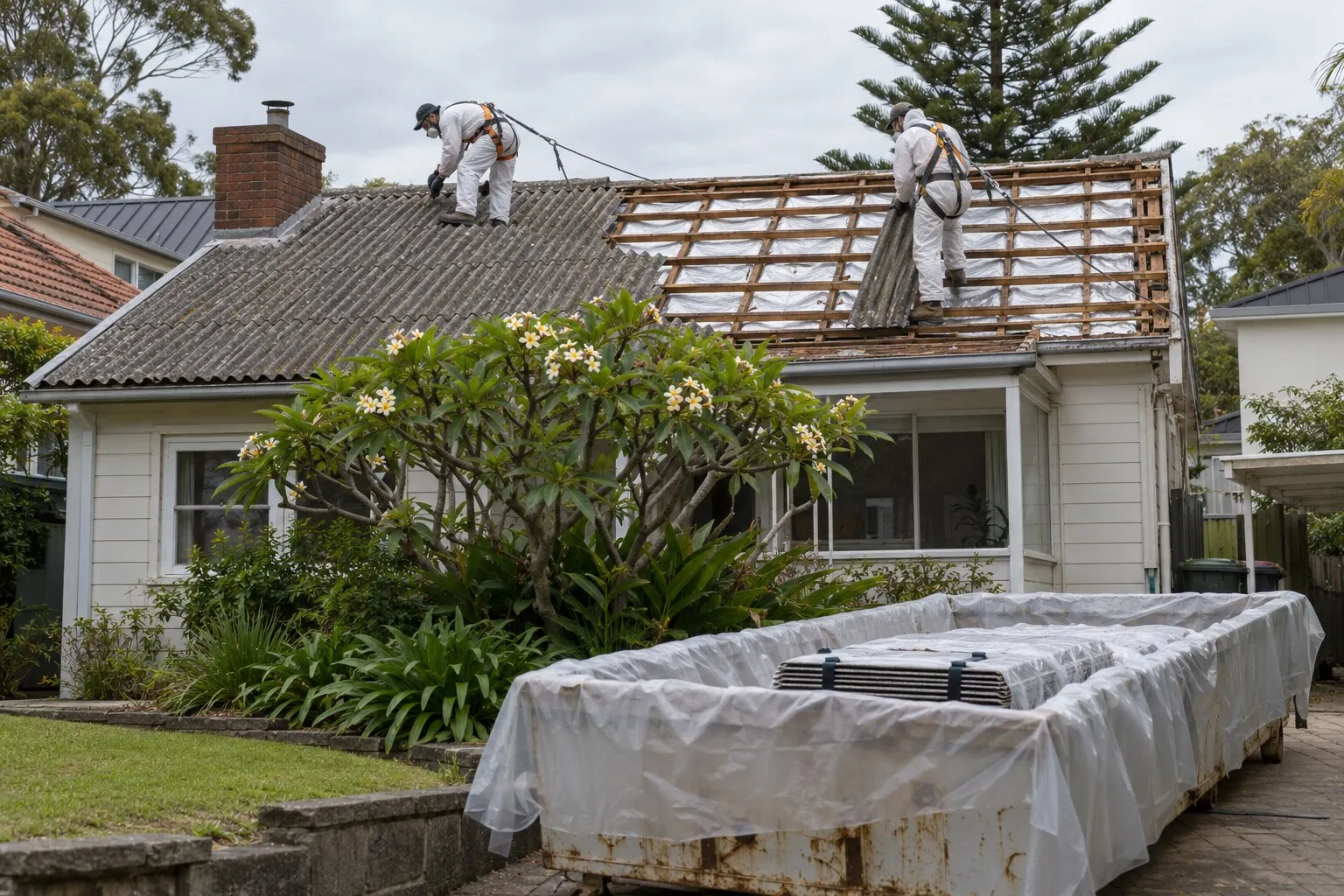
An old fibro roof changes the job. Any friable asbestos, or more than 10 m² of bonded asbestos, must be removed by a licensed asbestos removalist, and SafeWork NSW recommends a licensed professional for any amount of bonded asbestos. It says the removalist must notify it “at least five calendar days before” removing any friable asbestos or more than 10 m² of bonded asbestos, and must give notice to the owner, the occupier and immediate neighbours before the work starts. See asbestos roof removal for the rest.
The single Northern Beaches LEP and DCP in 2027
Council exhibited a draft single LEP and DCP for the whole Northern Beaches from 20 July 2026 and received 711 submissions. Its consultation page says a report on them “will be presented to Council in 2027”, and that “When the new Northern Beaches LEP and DCP commence (expected mid‑2027), they will replace all current planning controls.” Until then, the Pittwater, Warringah and Manly plans above apply. This guide reflects the rules as at 23 October 2026, and we’ll update it when the new plans start.
Common questions
Do I need council approval to replace my roof in NSW?
Not usually, for a one or two storey house that isn’t a heritage item or in a heritage conservation area. Replacing roof cladding is exempt development under the Codes SEPP if it meets the clause 2.54 standards: no new or bigger openings, no reduced fire resistance, no combustible cladding, and ember sealing on bush fire prone land.
Can I change my roof colour without approval?
None of the plans says in terms whether a colour change on an exempt re-roof is caught. The DCP colour rules are applied when the work needs a development application. If you’re changing colour, especially in the former Pittwater area, ask council (1300 434 434) first.
What roof colours are allowed in Pittwater?
The Pittwater 21 DCP’s Avalon Beach clause asks for “dark and earthy tones” with “low reflectivity”, and says “White, light coloured, red or orange roofs and walls are not permitted”. Every other Pittwater locality except the national park carries the same ban, worded slightly differently in some.
Do I need a DA to replace the roof on a heritage house?
Yes. The exempt re-roofing clause doesn’t apply to a heritage item or a home in a heritage conservation area, and Northern Beaches Council says: “If you wish to repair, change or renovate your heritage-listed property you need to lodge a development application.”
Can I change from tiles to Colorbond without council approval?
The exempt clause covers “the repair to or replacement of a non-structural wall or roof cladding” and doesn’t require the same material. A heritage listing, a change to the roof’s pitch or height, structural work or the building type can each take the job out of the exempt route.
Where this information comes from
The prices, rules and advice on this page come from these published pages, checked on 22 and 23 October 2026.
- State Environmental Planning Policy (Exempt and Complying Development Codes) 2008: clauses 1.15, 1.16, 2.53, 2.54, 2.73, 2.74 and Part 4 · NSW planning law, read in the version in force from 12 December 2025
- NSW Planning Portal: exempt development · NSW Government guidance, updated 7 February 2025
- Northern Beaches Council: exempt and complying development · Local council guidance, undated
- Northern Beaches Council: FAQs about heritage · Local council guidance, undated
- Northern Beaches Council: planning controls · Local council guidance, undated
- Pittwater 21 Development Control Plan, Section D: locality colour and materials controls · Council planning controls (live viewer)
- Pittwater 21 Development Control Plan, Section A (A1.7) · Council planning controls (live viewer)
- Warringah Development Control Plan 2011: A.1, D10, D11, D12 and G5 · Council planning controls (live viewer), amendment 23 commenced 15 September 2025
- Manly Development Control Plan 2013: 1.5, 3.4, 3.5.7.4 and 5.4.1.1 · Council planning controls (live viewer), amendment 17, last amended 15 September 2025
- Monier: FAQs · Roof tile manufacturer, page updated 22 September 2026
- Northern Beaches Council: new Northern Beaches LEP and DCP · Council consultation page, read 22 October 2026
- NSW Planning: land zoning map layer and NSW Spatial Services suburb boundaries · NSW Government map data, used for our reading of which plans cover each suburb
- Northern Beaches Council: bush fire prone land · Local council guidance; map certified 7 August 2020
- SafeWork NSW: working as a licensed asbestos removalist · NSW work health and safety regulator, updated 1 April 2026
- SafeWork NSW: asbestos · NSW work health and safety regulator, updated 14 August 2026
- Northern Beaches Council: asbestos · Local council guidance, undated