The short answer
BlueScope’s selection guide recommends standard Colorbond (Classic or Matt finish) more than 200 m from breaking surf, Colorbond Ultra more than 100 m away, and Superdura stainless steel closer than that. Zincalume needs more than 200 m from breaking surf and more than 100 m from calm marine water. The distances run from the high water mark, and BlueScope calls the table a guide only, so ask the roofer to name the product and the screw class in the quote.
Is Zincalume better than Colorbond near the coast?
Not by BlueScope’s own measure. Its selection guide puts Zincalume, the unpainted silver steel, in its strictest row for houses, alongside Colorbond Coolmax and Colorbond in a Metallic finish: each is recommended only more than 200 m from breaking surf and more than 100 m from calm marine water. Standard Colorbond in a Classic or Matt finish needs the same 200 m from the surf but has no minimum distance from calm water, and Colorbond Ultra comes down to more than 100 m from the surf.
So within 100 m of a calm bay, the table favours standard Colorbond over Zincalume. From 100 to 200 m from the surf it points to Colorbond Ultra, and closer than 100 m to Superdura stainless steel. Further back than both distances, either steel is in range and the choice comes down to looks, heat and the council’s roof colour rules.
Why the coast changes the choice of steel
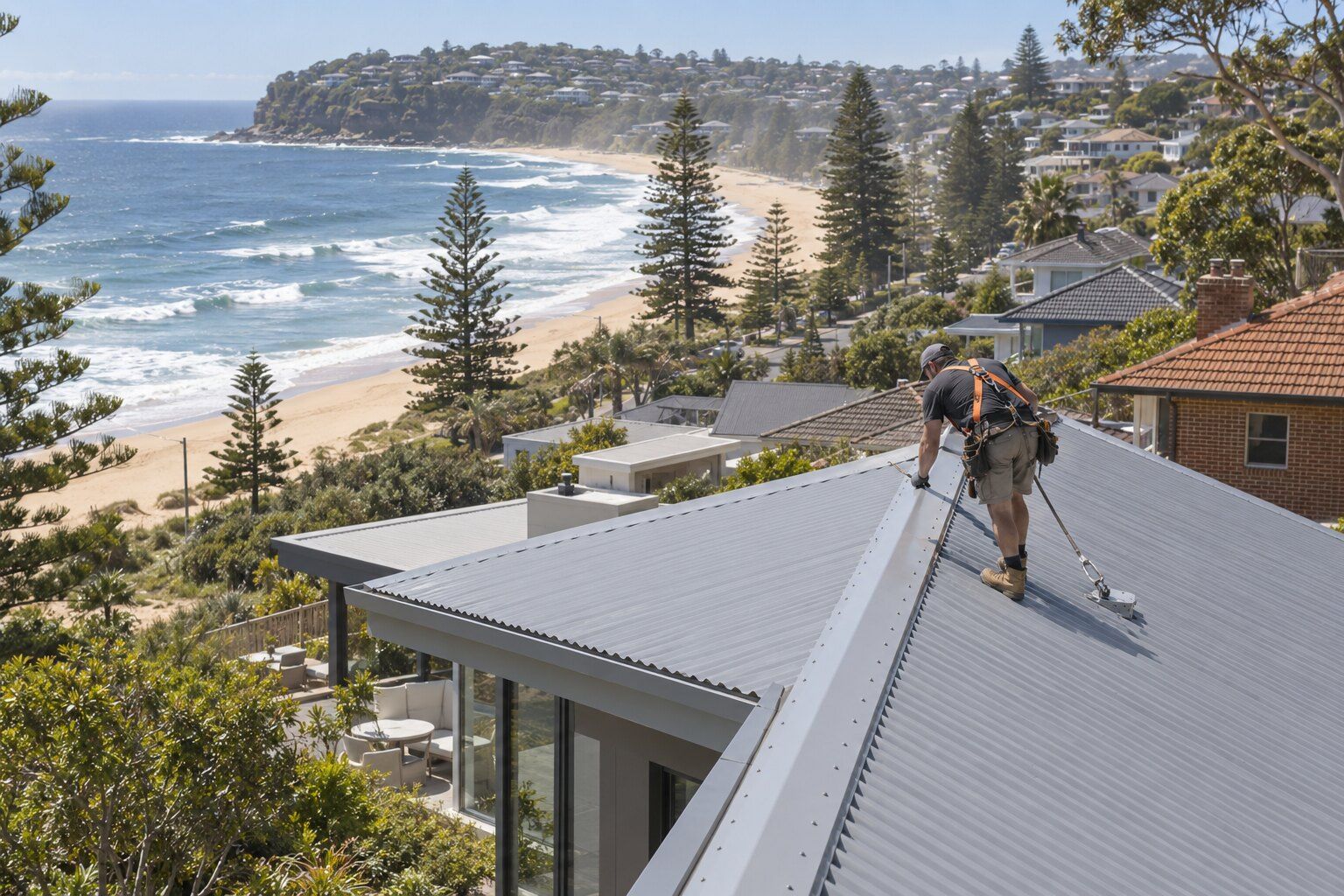
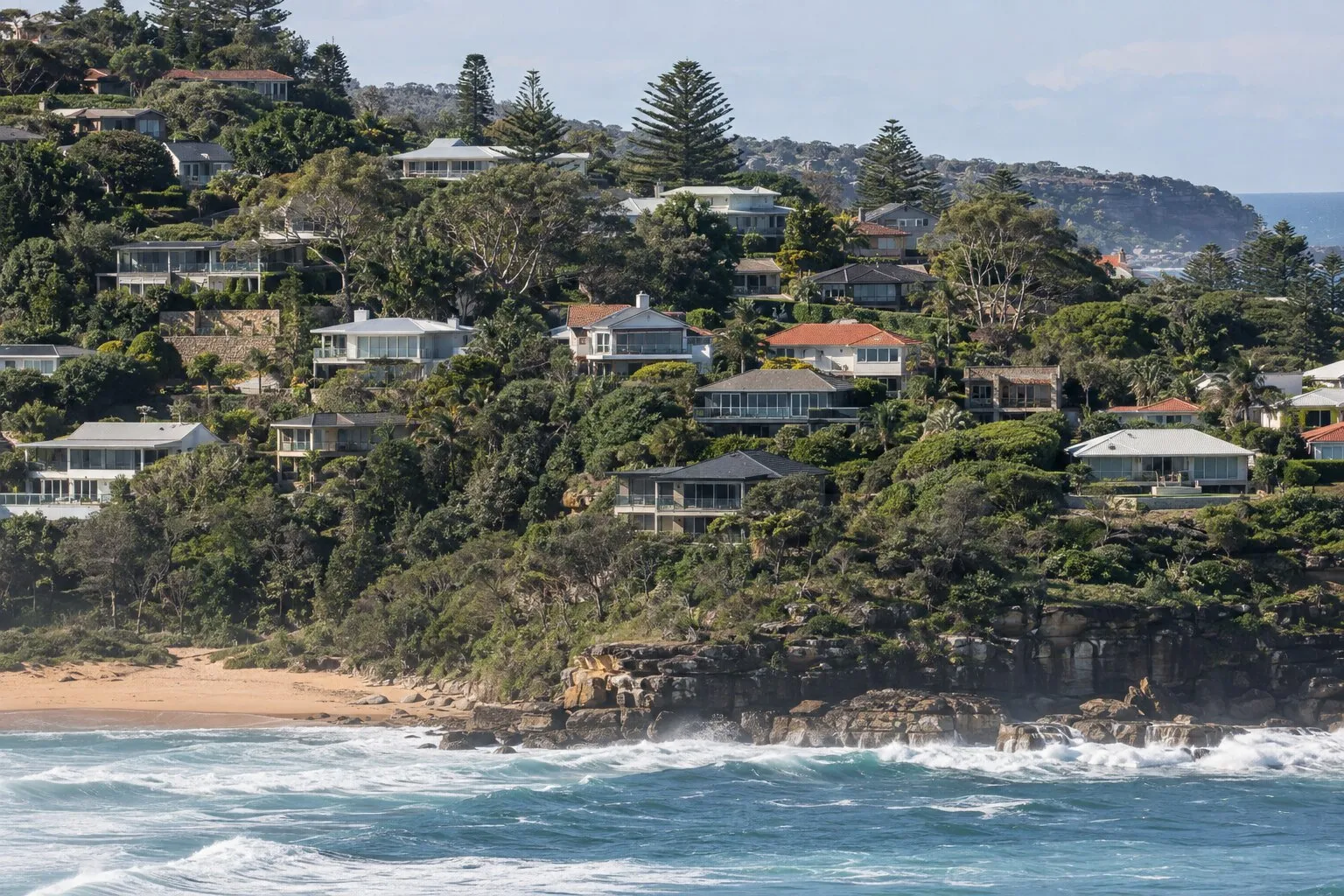
Salt spray settles on steel roofs and on the steel around them. BlueScope publishes a selection guide for its roofing steels that sets a minimum distance from the sea for each product, and its Lysaght brand publishes advice on the screws that go with them. On the Northern Beaches, with the ocean on one side of the peninsula and Pittwater or the harbour on the other, it’s the first question to settle before a new metal roof is ordered.
Colorbond Ultra, Colorbond and Zincalume: BlueScope’s distances
This is BlueScope’s own table, with its product names and distances exactly as published. Each product is recommended only beyond the distance shown.
BlueScope TB-1A: recommended steel for roofing in marine environments
| Product | Distance from breaking surf or exposed marine | Distance from calm marine |
|---|---|---|
| COLORBOND® Coolmax® steel *, COLORBOND® steel in a Metallic finish *, ZINCALUME® steel | > 200m | > 100m |
| COLORBOND® steel in a Classic finish, COLORBOND® steel in a Matt finish | > 200m | > 0m |
| COLORBOND® Ultra steel | > 100m | > 0m |
| SUPERDURA® Stainless steel | > 0m | > 0m |
BlueScope Technical Bulletin TB-1A, “Steel roofing products – selection guide”, March 2023, revision 14, Table 1, copied as published and checked 1 October 2026. Its notes: “* For commercial applications”; “Distance is as measured from the high water/tide mark.”; “Absolute performance is subject to local conditions including, but not limited to, prevailing winds, and presence of unwashed areas.” The bulletin calls the table “a GUIDE ONLY” and says “it is essential to consult with Steel Direct for advice on the most suitable choice of product.”
Read across the rows and three things stand out:
- Zincalume is in the strictest row for houses, as above.
- Colorbond Ultra halves the surf distance to more than 100 m.
- Closer than 100 m to breaking surf, the only roofing product in the table is Superdura stainless steel.
BlueScope adds that “Absolute performance is subject to local conditions including, but not limited to, prevailing winds, and presence of unwashed areas”. A home on an exposed ridge facing the sea isn’t the same as one tucked behind other houses at the same distance.
The seven Colorbond Ultra colours
If the table puts your house in Colorbond Ultra, the colour choice narrows. BlueScope’s colour chart lists seven of its 22 roofing colours in Ultra:
- Surfmist
- Shale Grey
- Windspray
- Dune
- Wallaby
- Woodland Grey
- Monument
The full range of 22 is on our roof replacement page.
Ocean surf or calm water: which column is yours?
The table has two columns: “breaking surf or exposed marine” and “calm marine”. BlueScope’s marine classification bulletin (TB-35, March 2026) defines the three types and names a few Sydney places; the rest is our reading:
- Breaking surf. The ocean beaches from Manly and Queenscliff up through Curl Curl, Dee Why, Collaroy, Narrabeen, Mona Vale, Newport, Avalon Beach, Whale Beach and Palm Beach face open surf.
- Exposed marine. TB-35 defines it as “Open expanses of salt or brackish water exposed to onshore winds, but not typically prone to breaking surf” and lists Sydney Harbour east of the Harbour Bridge as exposed. Manly Cove is on that part of the harbour, so it uses the stricter column. Clontarf and Seaforth face Middle Harbour, an arm of the same harbour that TB-35 doesn’t name separately; our reading is to use the stricter column there too, unless BlueScope says otherwise for your address.
- Calm marine. TB-35’s definition is “Protected areas of salt or brackish water, including ports, harbours, bays and river estuaries”. Sheltered bays of Pittwater, such as Church Point, Bayview and Careel Bay, and the lagoons read that way to us. TB-35 doesn’t name Pittwater, and it lists protected coastal waters such as Port Stephens and Jervis Bay as exposed, so a home facing the open stretch of Pittwater should check with BlueScope.
- Both. Narrow parts of the peninsula, around Palm Beach and Avalon, have the ocean on one side and Pittwater on the other. Measure to each and use whichever gives the stricter answer.
Where a home sits on a headland or the entrance to a bay, the line between the two isn’t clear. That’s a question for the roofer to put to BlueScope, which says it’s “essential to consult with Steel Direct for advice on the most suitable choice of product”.
How to work out your distance
- Open a map with a measuring tool and find the high water mark: BlueScope’s note says “Distance is as measured from the high water/tide mark”, not from the waterline at low tide or from your street address.
- Measure in a straight line from there to the nearest edge of the roof, not the front gate.
- If you’re near both the ocean and Pittwater or the harbour, measure to each.
- Ask the roofer to write the product (Colorbond in a Classic or Matt finish, Colorbond Ultra, Zincalume or Superdura stainless) and the screw class into the quote, so you can check both against the tables on this page.
The coastal roof material finder runs your distance through BlueScope’s tables, including its current fastener and gutter bulletins.
Screws and fixings near the sea
The sheets are only part of it. Lysaght’s fastener bulletin sets the screw class by exposure, and its distances are framed differently from BlueScope’s, so it’s shown here as a separate table rather than lined up with the one above.
Lysaght PAB04: screw class by exposure
| Exposure, as Lysaght describes it | Screws |
|---|---|
| Most external applications not closer than 400m from the ocean or severe marine influence | AS 3566.1 Class 3 |
| Severe exposure conditions, which the bulletin lists against COLORBOND® steel 200m to 400m from marine environments | AS 3566.1 Class 4 |
| Very severe exposure conditions, listed against SUPERDURA® Stainless steel | Stainless steel |
Lysaght Product Advisory Bulletin PAB04, “Fasteners”, January 2024, Table 4.1, in our own short form, checked 1 October 2026. The bulletin’s general rule is “You should use screws to AS 3566.1 Class 3 (or better)”, and it says “Stainless steel fasteners are recommended for use only with SUPERDURA® Stainless steel.” Its distances are measured “from marine environments”, not from breaking surf, so don’t line them up with BlueScope’s table above.
On a metal roof, corrosion often shows first at the fixings and cut edges. If you’re getting a new roof or a restoration near the coast, ask which class of screw is going in.
Washing and maintenance in salt air
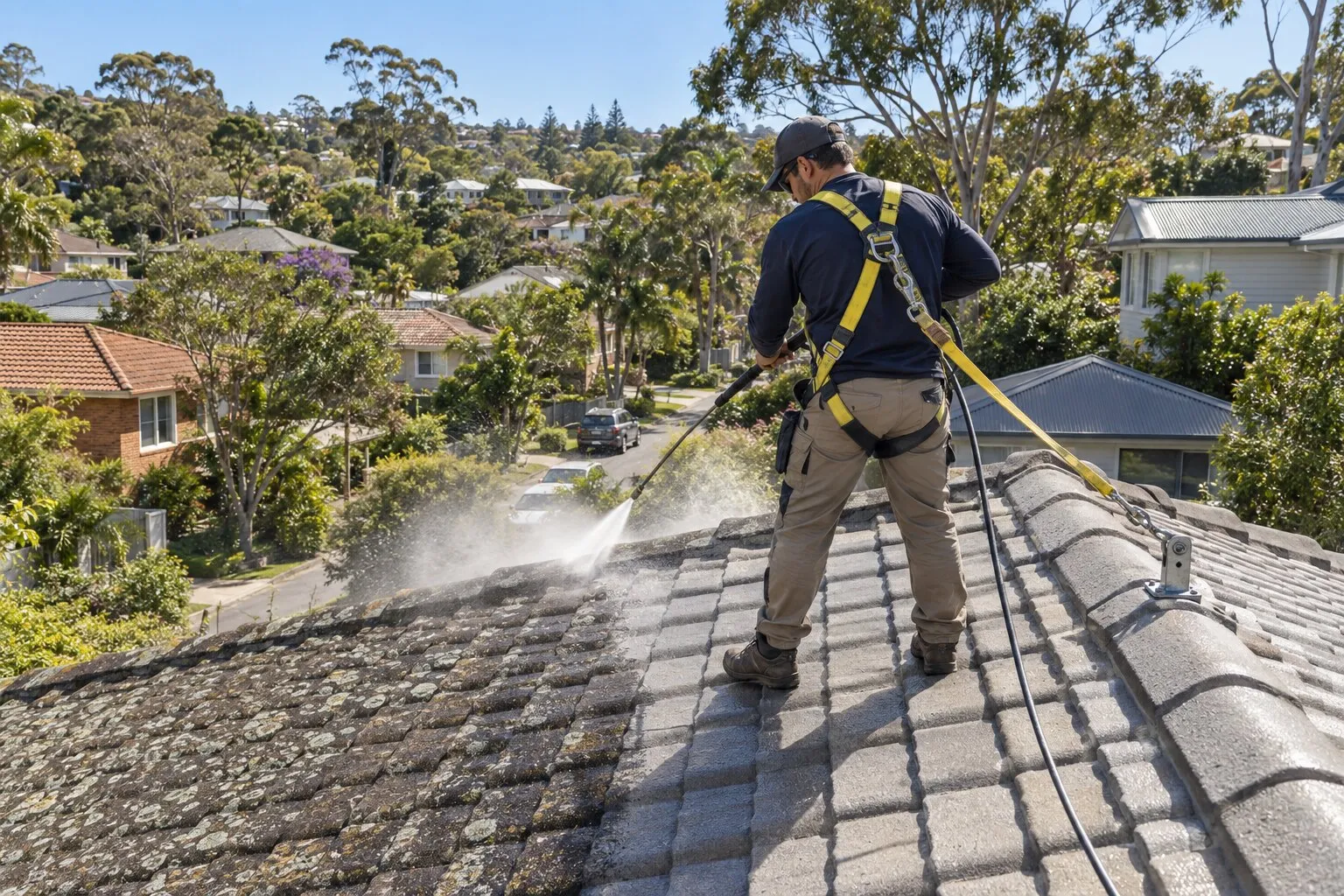
BlueScope’s maintenance bulletin (TB-4) says coated steel in “unwashed areas”, the places rain doesn’t reach, needs regular cleaning. It lists fascias, wall cladding under the eaves, garage doors and the underside of eave gutters, carports and patios, and says “Washing should be done six monthly as a minimum, or three monthly in locations such as coastal areas where marine salt spray is prevalent”.
Lysaght’s installation manual says “Maintenance is probably the biggest factor” in how long its roofing lasts, and lists “Regular washing down, especially near coastal or industrial influences” and clearing leaves and debris from gutters, downpipes and leaf guards. On a leafy block, keeping the gutters clear is part of the same job.
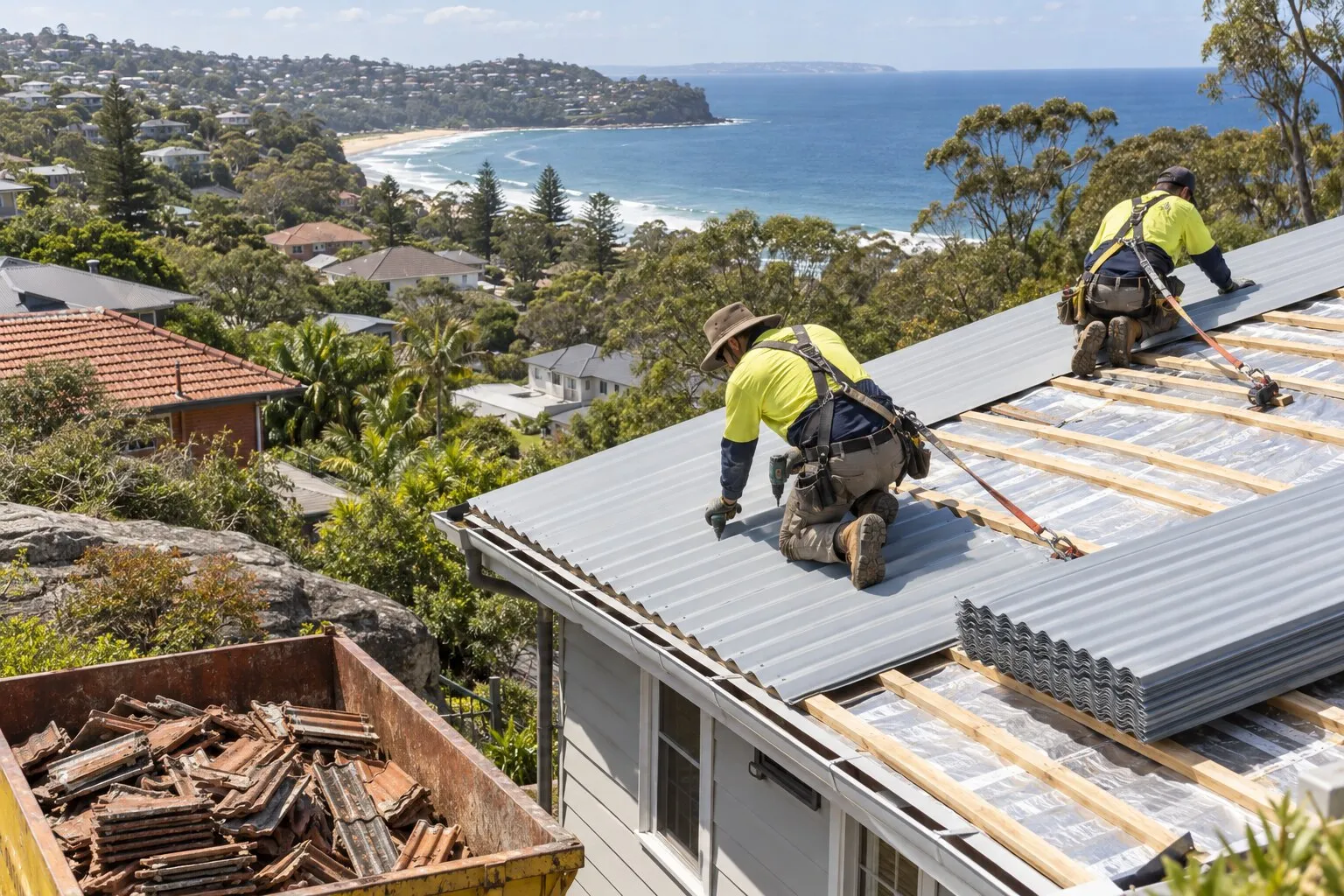
We’d rather you didn’t climb onto the roof to do it. Do what you can reach from the ground, and leave the roof itself to someone with the right safety gear.
What about tiles near the coast?
Tile makers argue tiles suit salt air better. Monier, a roof tile manufacturer, says on its FAQ page: “All Monier concrete and terracotta roof tiles are salt safe and will not corrode over time, however Terracotta is the ultimate roofing product in these conditions given its performance and also colour warranty of 30 years.” That’s a manufacturer’s claim about its own product, from a business that competes with steel. Tiles bring their own upkeep, in ridge capping and pointing, and the roof replacement cost guide compares published prices for each material.
Bush fire prone land
Northern Beaches Council publishes a bush fire prone land map for the whole council area, certified by the NSW Rural Fire Service on 7 August 2020; the council notes these maps are reviewed every five years. Replacing roof cladding can be exempt development under the NSW Codes SEPP, but to stay exempt on bush fire prone land the work must “be adequately sealed or protected to prevent the entry of embers” and “use equivalent or improved quality materials”. Check your property on the council’s bush fire prone land map or its section 10.7 planning certificate, and ask the roofer to confirm the approval pathway.
What needs a licensed roofer
In NSW, metal roofing is roof plumbing work, which the licence page defines as work on “guttering, downpipes, roof flashing and roof coverings”. Work worth more than $5,000 in labour and materials, including GST, must be done under a contractor licence in the right category, with a written contract that shows the licence holder’s name and licence number. Check it on the Service NSW licence register.
For prices on a new steel roof, see roof replacement cost; for the work itself, roof replacement and re-roofing.
Common questions
How close to the beach can I use Colorbond?
BlueScope’s selection guide (TB-1A, March 2023) recommends Colorbond in its Classic and Matt finishes more than 200 m from breaking surf or exposed marine conditions. From calm marine water, its distance is more than 0 m. Distances are measured from the high water or tide mark, and BlueScope calls the table a guide only.
What is Colorbond Ultra for?
It’s the Colorbond steel BlueScope’s selection guide recommends closer to the surf: more than 100 m from breaking surf or exposed marine conditions, against more than 200 m for standard Colorbond. Closer than 100 m to breaking surf, the guide’s only listed roofing product is Superdura stainless steel.
Zincalume or Colorbond near the beach?
BlueScope’s table is stricter on Zincalume: more than 200 m from breaking surf and more than 100 m from calm marine water, against no minimum from calm water for Colorbond in a Classic or Matt finish.
Does Pittwater count as breaking surf or calm water?
BlueScope’s marine classification bulletin (TB-35, March 2026) names Manly Beach as surf and lists Sydney Harbour east of the Harbour Bridge, including Manly Cove, as exposed, which TB-1A reads with breaking surf. It doesn’t name Pittwater or Middle Harbour. Our reading: Middle Harbour, an arm of the same harbour, uses the stricter column too; sheltered Pittwater bays such as Church Point, Bayview and Careel Bay fit its calm definition. TB-35 lists protected coastal waters such as Port Stephens and Jervis Bay as exposed, so a home facing the open stretch of Pittwater should check with BlueScope.
What screws should be used on a roof near the sea?
Lysaght’s fastener bulletin (PAB04, January 2024) lists AS 3566.1 Class 3 for most external work not closer than 400 m from the ocean or severe marine influence, Class 4 for severe exposure conditions, and stainless steel only with Superdura stainless sheeting. Ask for the screw class in the quote.
How often should Colorbond be washed near the coast?
BlueScope’s maintenance bulletin (TB-4) says coated steel in places the rain doesn’t wash, such as fascias, garage doors and the underside of eave gutters, should be washed “six monthly as a minimum, or three monthly in locations such as coastal areas where marine salt spray is prevalent”.
Are roof tiles better than steel near the sea?
Tile makers say so. Monier, a roof tile manufacturer, says all its concrete and terracotta tiles “are salt safe and will not corrode over time”, and calls terracotta “the ultimate roofing product in these conditions”. That’s a manufacturer’s claim; we haven’t found an independent test comparing them on the Beaches. See roof replacement cost for what each material costs.
Where this information comes from
The rules and manufacturer guidance on this page come from these published pages, checked on 1 October 2026.
- BlueScope TB-1A: steel roofing products selection guide · Manufacturer technical bulletin, March 2023, revision 14
- BlueScope TB-35: Australian salt marine classifications · Manufacturer technical bulletin, March 2026, revision 9
- BlueScope TB-4: maintenance of COLORBOND steel and ZINCALUME steel · Manufacturer technical bulletin, January 2021, revision 11
- Lysaght PAB04: fasteners · Manufacturer product advisory bulletin, January 2024
- Lysaght: roofing and walling installation manual · Manufacturer installation manual, PDF dated 15 May 2025
- Monier: FAQs · Roof tile manufacturer, page updated 22 September 2026
- State Environmental Planning Policy (Exempt and Complying Development Codes) 2008, clauses 2.53 and 2.54 · NSW planning law: minor external building alterations, including roof cladding
- Northern Beaches Council: bush fire prone land · Local council guidance; map certified 7 August 2020
- NSW RFS: prepare your home · NSW Rural Fire Service guidance
- NSW Government: roof plumbing work licence · NSW Fair Trading licence page, updated 23 June 2026
- NSW Government: guide to providing home building contracts · NSW Fair Trading guidance, updated 11 June 2026
- Service NSW: check a trade licence · NSW Government licence register