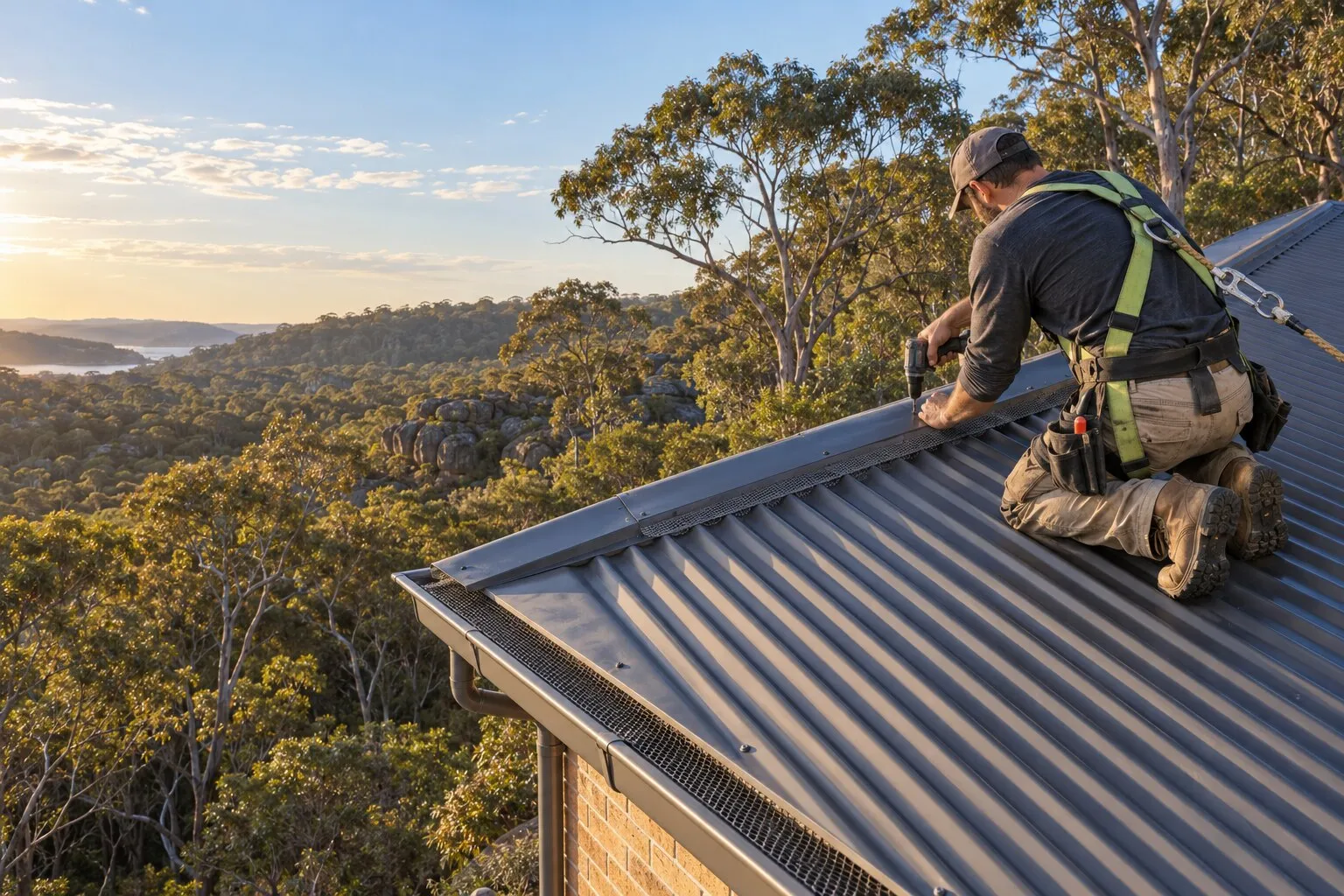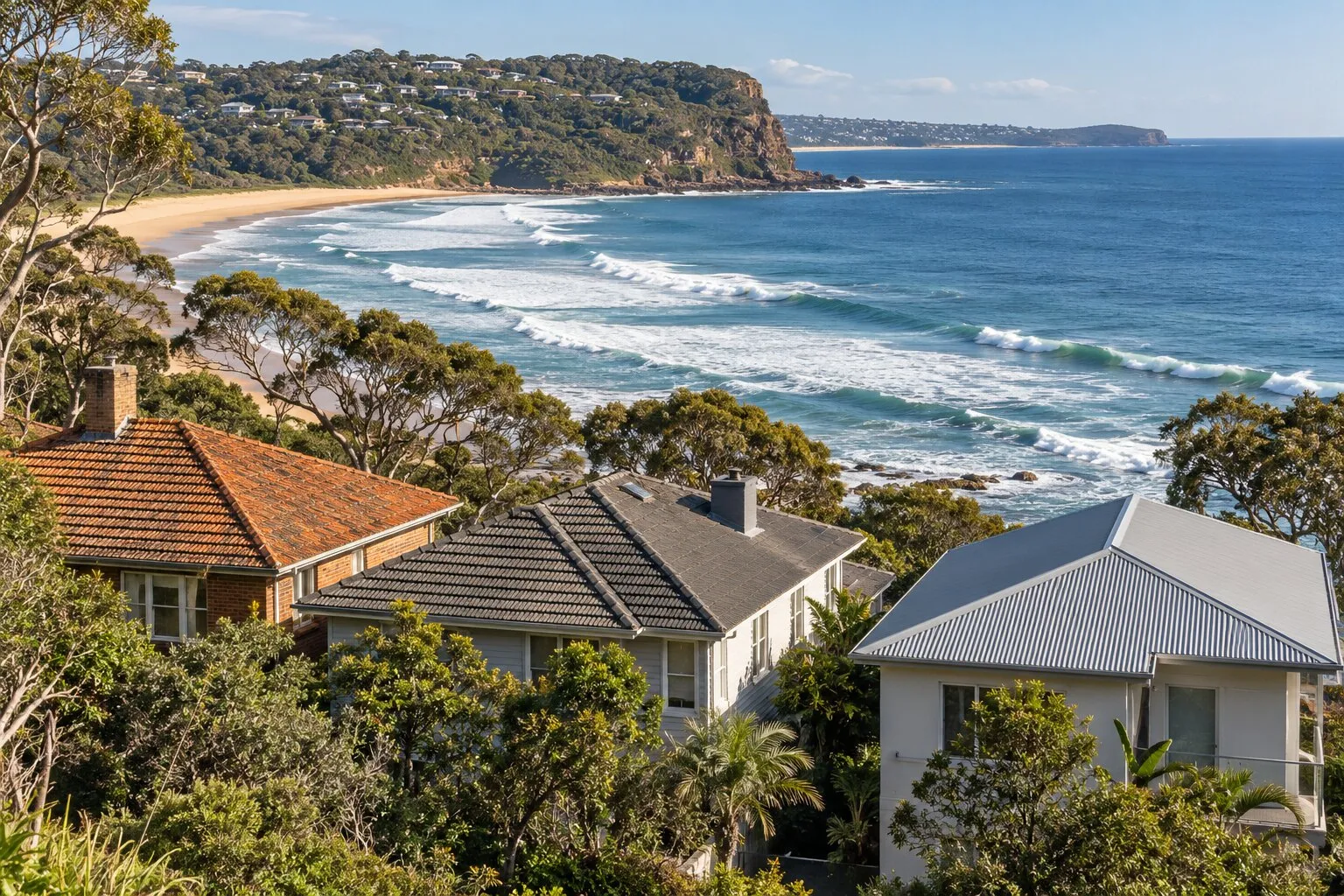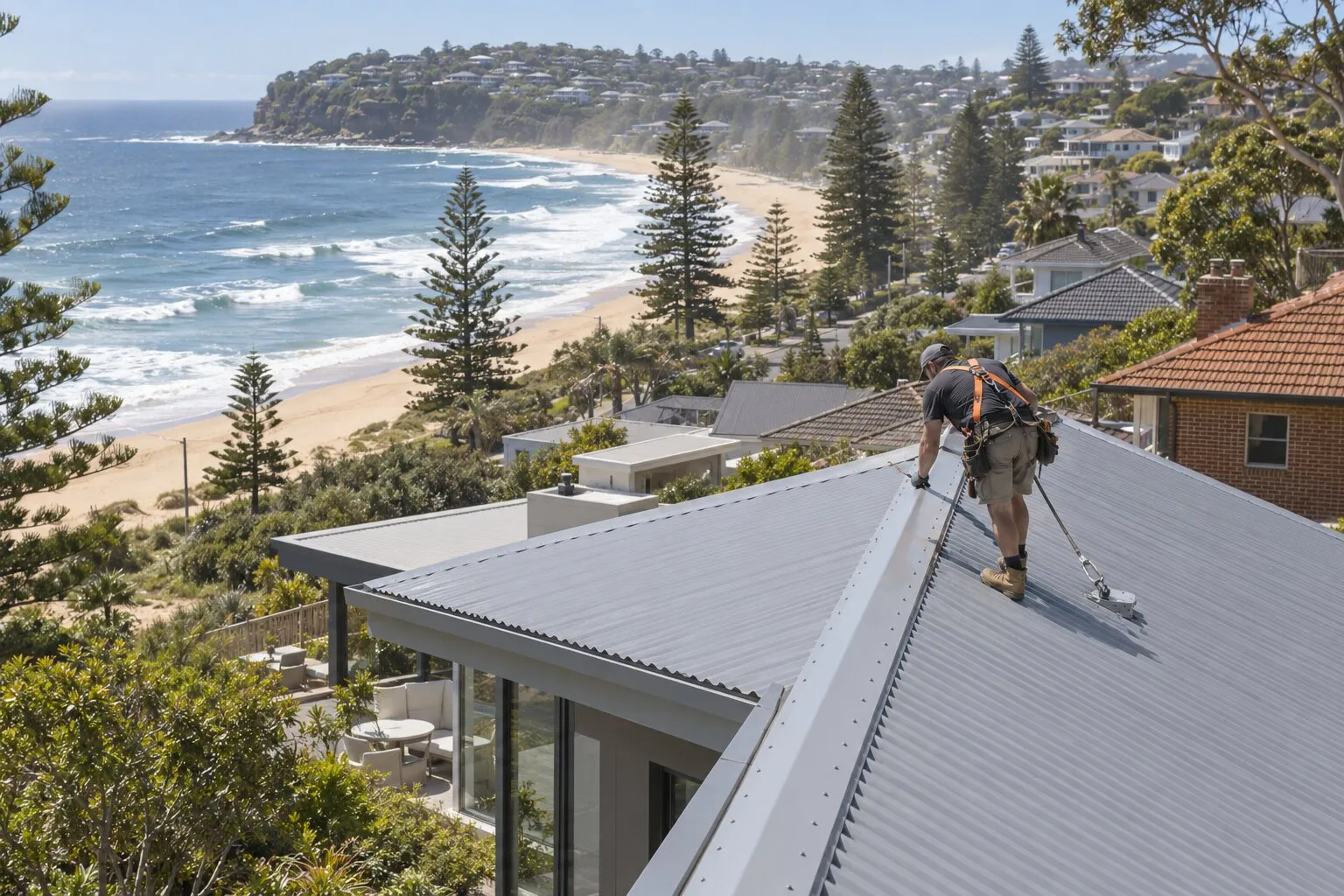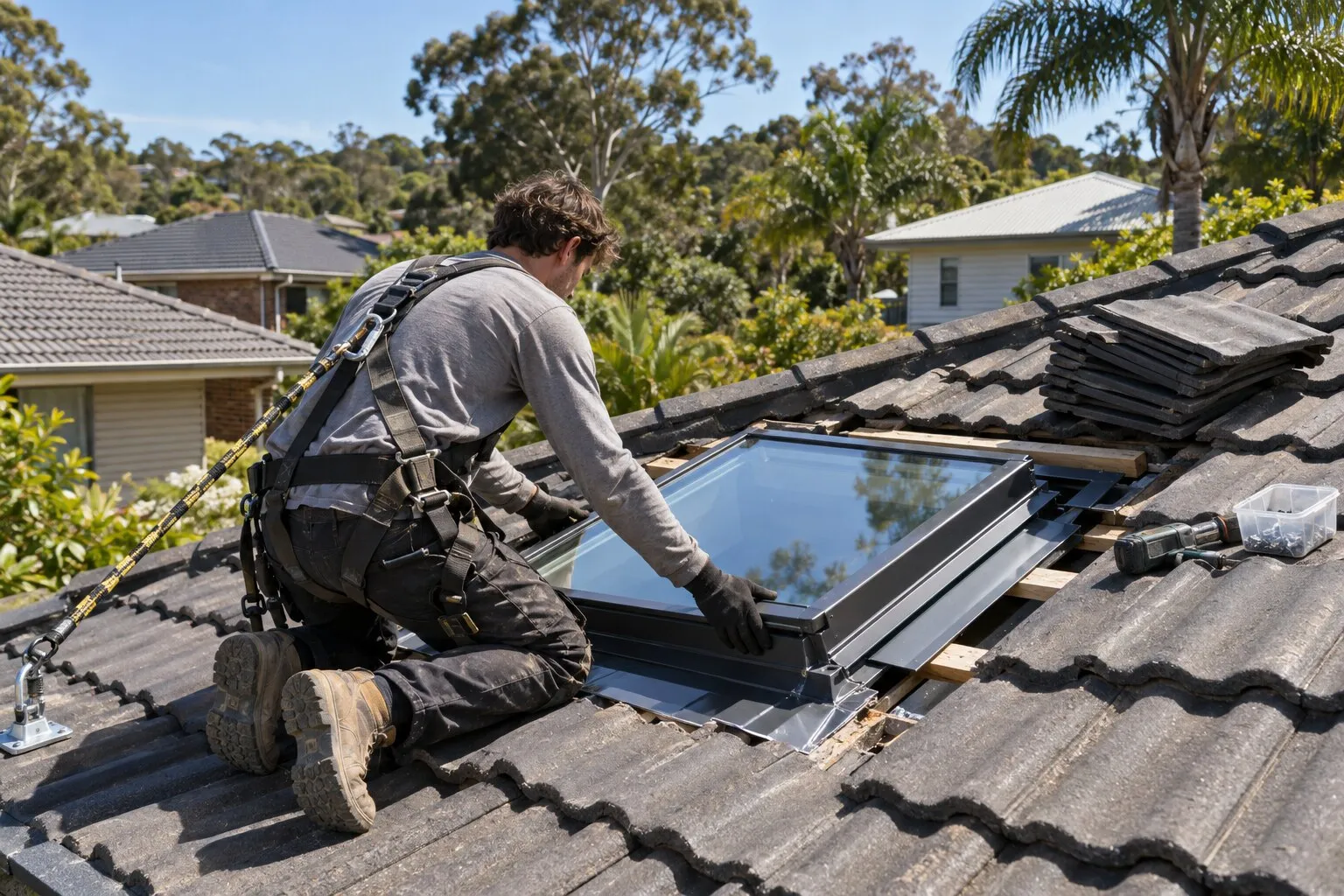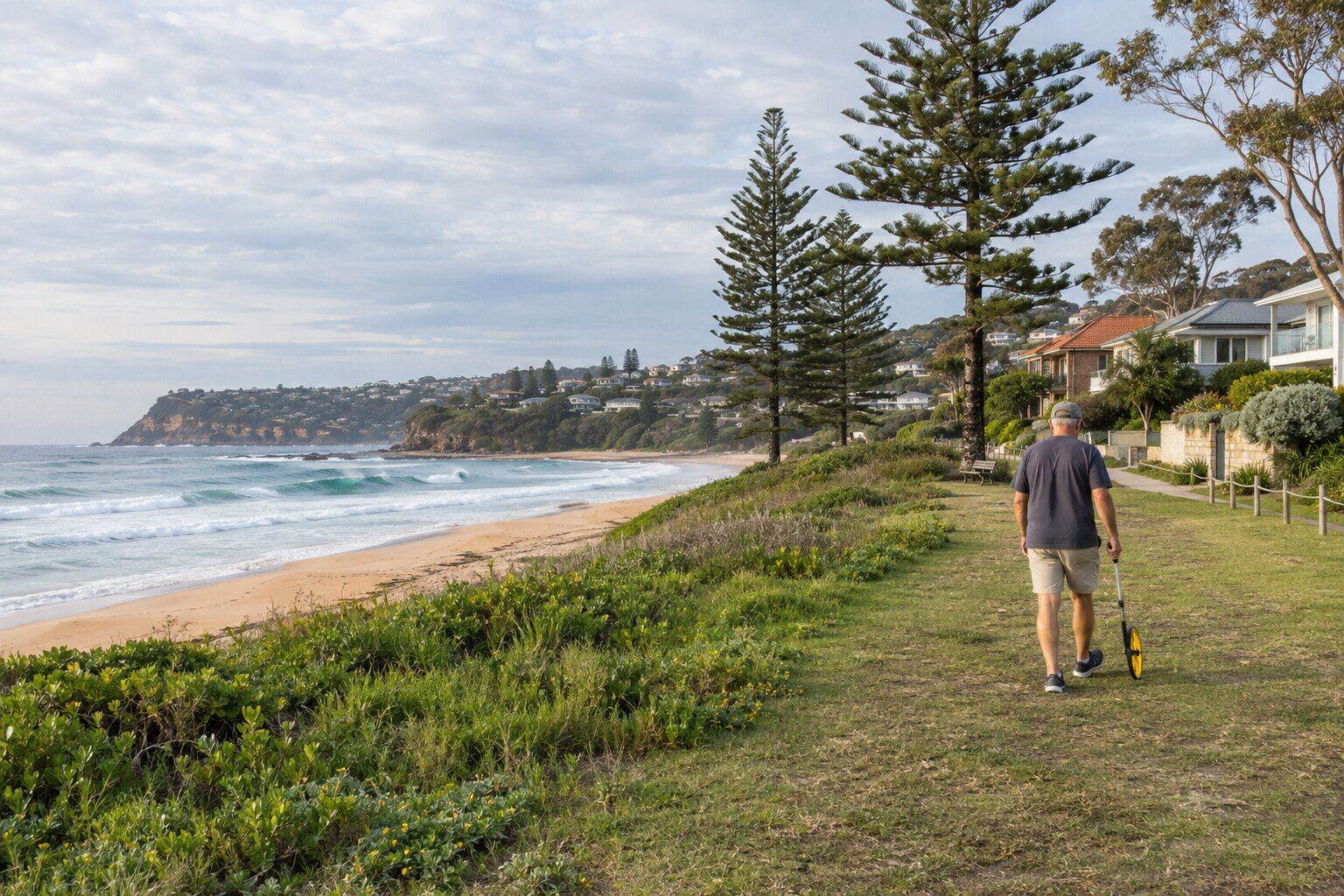
Salt spray decides which steel will last on a Northern Beaches roof. BlueScope, which makes Zincalume and Colorbond, publishes a minimum distance from the sea for each of its roofing steels. This finder applies its tables to your distance and shows the rows it used, so you can check them against the bulletins.
Coastal roof material finder
Three questions. Measure from the high water mark, not the street.
Your result
Enter your distance above to see BlueScope’s recommendation for it. The same tables are on this page below, so you can read them yourself.
How the coastal roof finder works
It reads three BlueScope technical bulletins. TB-1A sets which roofing steel suits each distance from the sea. TB-16 sets the screws, and TB-15 the gutters, downpipes and fascia. It never mixes their distances, because each bulletin measures differently. The answer is a guide: BlueScope says “it is essential to consult with Steel Direct for advice on the most suitable choice of product”, and a licensed local roofer should confirm the product and screws for your address in the quote.
Surf, exposed or calm: BlueScope’s three types of salt water
TB-35 (March 2026) sorts salt water into three types. TB-1A then uses two columns: one for breaking surf or exposed marine, the other for calm marine.
BlueScope TB-35: marine classifications
3 rows
| Type | BlueScope’s definition | On the Northern Beaches |
|---|---|---|
| Breaking surf | “Areas exposed to breaking surf and ocean spray” | The ocean beaches from Manly to Palm Beach. TB-35 names Manly Beach as surf. |
| Exposed marine | “Open expanses of salt or brackish water exposed to onshore winds, but not typically prone to breaking surf” | TB-35 lists Sydney Harbour east of the Harbour Bridge, which includes Manly Cove. Our reading puts Middle Harbour (Clontarf, Seaforth) here too. |
| Calm marine | “Protected areas of salt or brackish water, including ports, harbours, bays and river estuaries” | Sheltered bays such as Church Point, Bayview and Careel Bay, and the lagoons. TB-35 doesn’t name Pittwater; check open stretches with BlueScope. |
BlueScope TB-35, March 2026, revision 9, checked 6 October 2026. The definitions are quoted; the third column is our reading, apart from Manly Beach (surf) and Sydney Harbour east of the Harbour Bridge (exposed), which TB-35 names. BlueScope says the factors that change things include “prevailing winds, shelter, elevation above the marine influence and unwashed areas are a few of the factors that may impact on the corrosive nature of salt marine environments.”
Which steel suits which distance
This is TB-1A’s table, with BlueScope’s product names and distances as published.
BlueScope TB-1A: roofing steel by distance from the sea
4 rows
| Product | Distance from breaking surf or exposed marine | Distance from calm marine |
|---|---|---|
| COLORBOND® Coolmax® steel *, COLORBOND® steel in a Metallic finish *, ZINCALUME® steel | > 200m | > 100m |
| COLORBOND® steel in a Classic finish, COLORBOND® steel in a Matt finish | > 200m | > 0m |
| COLORBOND® Ultra steel | > 100m | > 0m |
| SUPERDURA® Stainless steel | > 0m | > 0m |
BlueScope TB-1A, March 2023, revision 14, Table 1, copied as published and checked 6 October 2026. Its notes: “Absolute performance is subject to local conditions including, but not limited to, prevailing winds, and presence of unwashed areas.”; “Distance is as measured from the high water/tide mark.”; “* For commercial applications”. BlueScope calls the table “a GUIDE ONLY” and says “it is essential to consult with Steel Direct for advice on the most suitable choice of product.”
Each product is listed only beyond its distance, so at exactly 200 m from the surf standard Colorbond isn’t yet listed. BlueScope’s product page says to “Specify SUPERDURA® Stainless steel typically within 100 metres of breaking surf”. For the seven Colorbond Ultra colours, see the guide to Colorbond Ultra and Zincalume near the coast.
Screws and fasteners near the sea
TB-16 pairs a fastener class with each corrosion category. Its distances are nominal and measured from any marine influence, so they’re shown on their own here.
BlueScope TB-16: fasteners by environment
4 rows
| Corrosivity category and environment | Nominal distance from marine influence | Fastener class: product |
|---|---|---|
| Low (C2) – Medium (C3), Mild / Moderate | > 1km | Class 3: ZINCALUME® steel, COLORBOND® steel, COLORBOND® Ultra steel |
| High (C4), Moderate / Industrial / Severe Marine | 200m - 1km | Class 4: ZINCALUME® steel, COLORBOND® steel, COLORBOND® Ultra steel |
| Very High (C5), Moderate / Industrial / Severe Marine | <200m | Consult fastener supplier: COLORBOND® Ultra steel; 300 Series stainless steel: SuperDura® Stainless Steel |
| Extreme (CX), Very Severe Marine / Industrial | <200m | 300 Series stainless steel: SuperDura® Stainless Steel |
BlueScope TB-16, June 2026, revision 15, Table 1, checked 6 October 2026. Fastener classes are to AS 3566.2-2025. Its notes say the table “is to be considered in conjunction with AS 4312:2019”, and that for the Very High (C5) row “Fastener manufacturers must provide a performance statement confirming that their product is fit for use with metal claddings in C5 zones for minimum of 10 years.” The distances are nominal and measured from “marine influence”, not split into surf and calm water like TB-1A’s.
- “Fasteners used to fix roofing and walling manufactured from BlueScope Steel products must, as a minimum, comply with AS 3566.2-2025 Class 3”.
- “In areas of uncertainty, it is advisable to use fasteners with the higher corrosion resistance rating.”
- “Materials that are incompatible and must not be used with COLORBOND® steel and ZINCALUME® steel include stainless steel, copper and copper containing alloys.” Only stainless steel fasteners are to be used with SUPERDURA® Stainless steel.
TB-16’s distances are measured from any marine influence and aren’t split by water type, and its closest rows don’t list a screw for standard Colorbond or Zincalume. TB-16 says to read it “in conjunction with AS 4312:2019” and “In areas of uncertainty, it is advisable to use fasteners with the higher corrosion resistance rating”. Ask the fastener supplier for the class, in writing.
Flashings and metals that don’t mix
TB-8 says “The most desirable and suitable flashing materials are COLORBOND® steel or ZINCALUME® steel sheet formed to suit the application.” Lead “it IS NOT compatible with COLORBOND® steel, SUPERDURA® Stainless steel or ZINCALUME® steel which are prone to corrosion when in contact with, or receiving run-off water from, lead.” Copper causes the same trouble: “Bi-metallic corrosion of exterior BlueScope coated steel occurs when these products are in direct contact with copper, and from contact with “copper-rich” water run-off”, such as hot water overflows. TB-8 recommends painting copper pipes and taking hot water discharge pipes past the roof, preferably to the ground. “Only stainless steel flashing products should be used with SUPERDURA® Stainless steel.”
Gutters, downpipes and fascia near the coast
TB-15 has its own, shorter table for rainwater goods, measured “from salt marine influence” to the high water mark. It doesn’t list a product within 100 m, so ask BlueScope what to use there. It also says “Stainless steel, lead, copper, and copper-containing alloys must not be used in conjunction with COLORBOND® steel, ZINCALUME® steel or zinc-coated steel.”
BlueScope TB-15: eave gutters, downpipes and fascia
| Product | Distance from salt marine influence |
|---|---|
| ZINCALUME® steel, COLORBOND® steel or COLORBOND® Coolmax® steel | >200m |
| COLORBOND® Ultra steel | >100m |
BlueScope TB-15, May 2024, revision 16, Table 1, checked 6 October 2026. BlueScope calls it “a GUIDE ONLY”.
To size the gutters and downpipes themselves, use the gutter and downpipe calculator.
Washing salt off the sheltered steel
TB-4 defines unwashed areas as “areas on a building that are sheltered from general rain washing”. It names “fascia, wall cladding under eaves, garage doors, and the underside of eave gutters, carports and patios” and says “Washing should be done six monthly as a minimum, or three monthly in locations such as coastal areas where marine salt spray is prevalent”. For the method: “Washing should be conducted with a sponge, soft cloth or soft bristle nylon brush (no abrasive scourers, steel wool etc.), and be performed gently to reduce the possibility of scuffing the product surface.” Do it from the ground or a ladder; leave the roof itself to someone with fall protection.
Sheltered or exposed: why it matters
The table gives one distance per product, but BlueScope says: “Localised environmental conditions will impact the corrosive nature of a particular site which may alter recommendations. Such conditions include the direction of prevailing winds, amount of rainfall, time of wetness, temperature, shelter and areas not naturally washed by rainfall.” A house on an exposed headland at 250 m may see more salt than one tucked behind a hill at 150 m. A sheltered house has more steel that rain doesn’t wash, so the washing above matters more there. Near a cut-off, or on an exposed site, have the roofer put your address to BlueScope before the steel is ordered.
Common questions
Is Pittwater or Middle Harbour surf, exposed or calm water?
BlueScope’s marine classification bulletin (TB-35, March 2026) doesn’t name either. It lists Sydney Harbour east of the Harbour Bridge as exposed, and Middle Harbour is an arm of that harbour, so our reading is to use the stricter breaking surf or exposed column there. Its calm definition is “Protected areas of salt or brackish water, including ports, harbours, bays and river estuaries”, which fits sheltered Pittwater bays such as Church Point, Bayview and Careel Bay. TB-35 lists protected coastal waters such as Port Stephens and Jervis Bay as exposed, so a home facing the open stretch of Pittwater should check with BlueScope.
Can stainless steel screws be used on a Colorbond roof?
No. BlueScope’s fastener bulletin (TB-16, June 2026) says “Materials that are incompatible and must not be used with COLORBOND® steel and ZINCALUME® steel include stainless steel, copper and copper containing alloys.” Stainless fasteners are only for its SuperDura stainless sheeting.
Does the warranty depend on how close the house is to the sea?
BlueScope says its warranties are subject to exclusions, application and eligibility criteria, and its product pages tie each steel to a coastal environment. Ask for the BlueScope warranty that applies to your address, in writing, before the steel is ordered.
Where this information comes from
The rules in this tool on this page come from these published pages, checked on 6 October 2026.
- BlueScope TB-1A: steel roofing products, selection guide · Manufacturer technical bulletin, March 2023, revision 14
- BlueScope TB-35: Australian salt marine classifications · Manufacturer technical bulletin, March 2026, revision 9
- BlueScope TB-16: fasteners for roofing, walling and accessory products · Manufacturer technical bulletin, June 2026, revision 15
- BlueScope TB-8: flashing materials for exterior BlueScope coated steel sheet · Manufacturer technical bulletin, January 2021, revision 10
- BlueScope TB-15: steel eave gutter, downpipe and fascia products · Manufacturer technical bulletin, May 2024, revision 16
- BlueScope TB-4: maintenance of exterior BlueScope coated steel products · Manufacturer technical bulletin, January 2021, revision 11
- BlueScope: SUPERDURA Stainless steel · Manufacturer product page, undated