The short answer
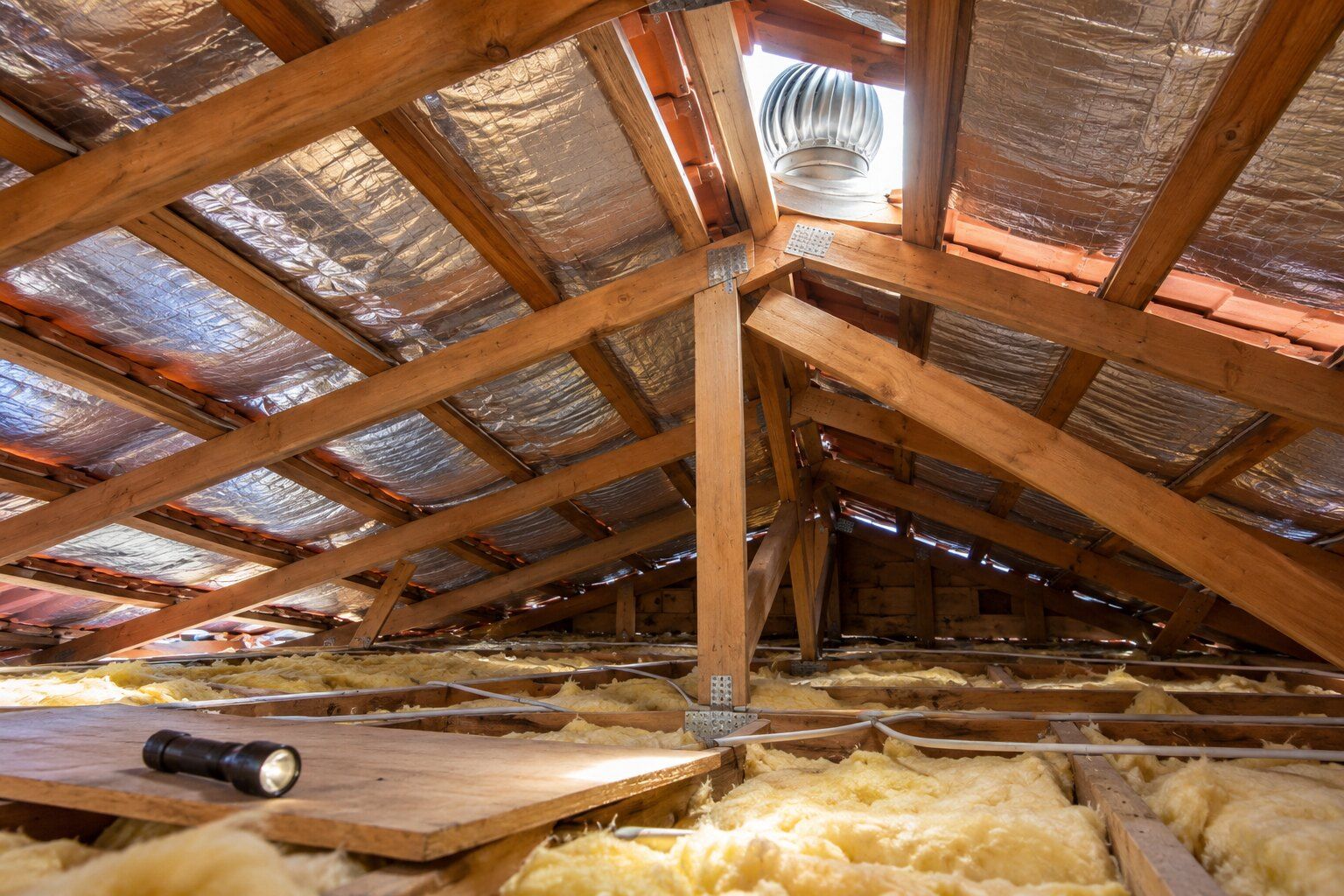
Sarking is the foil-faced membrane laid under tiles or metal sheets. It catches water that gets past the roof covering, keeps out dust and wind-driven rain, and on bush fire prone land it has to meet NSW rules. Monier lists 15° as the lowest pitch for its tiles with sarking and 20° without, and recommends it either way. A whirlybird is a wind-driven vent that lets hot, moist air out of the roof space. Neither fixes a leaking roof on its own, and the time to add sarking is during a re-roof.
What roof sarking does
Monier, a roof tile manufacturer, describes sarking as “a type of foil lining for your roof” and says it is “highly recommended for all roofing types.” It goes over the rafters and under the battens, so water blown in under tiles during a southerly runs down the sarking to the gutter instead of dripping onto the ceiling. It also keeps out dust and leaf litter, and the foil face reflects some of the sun’s heat.
Many older Beaches tile roofs were laid without it. You can tell from the roof space: if you look up and see the underside of the tiles and daylight at the laps, there’s no sarking. On those roofs a single cracked tile lets water straight onto the ceiling.
When tiles need sarking
Pitch decides it. Monier’s product pages for its Elabana concrete tile and Marseille terracotta tile both give a minimum pitch of 15° with sarking and 20° without. Its Elabana page says sarking is not mandatory above 20°, but Monier recommends it. A low-pitched extension or patio roof in tiles is the case to ask about.
Adding sarking to an existing roof
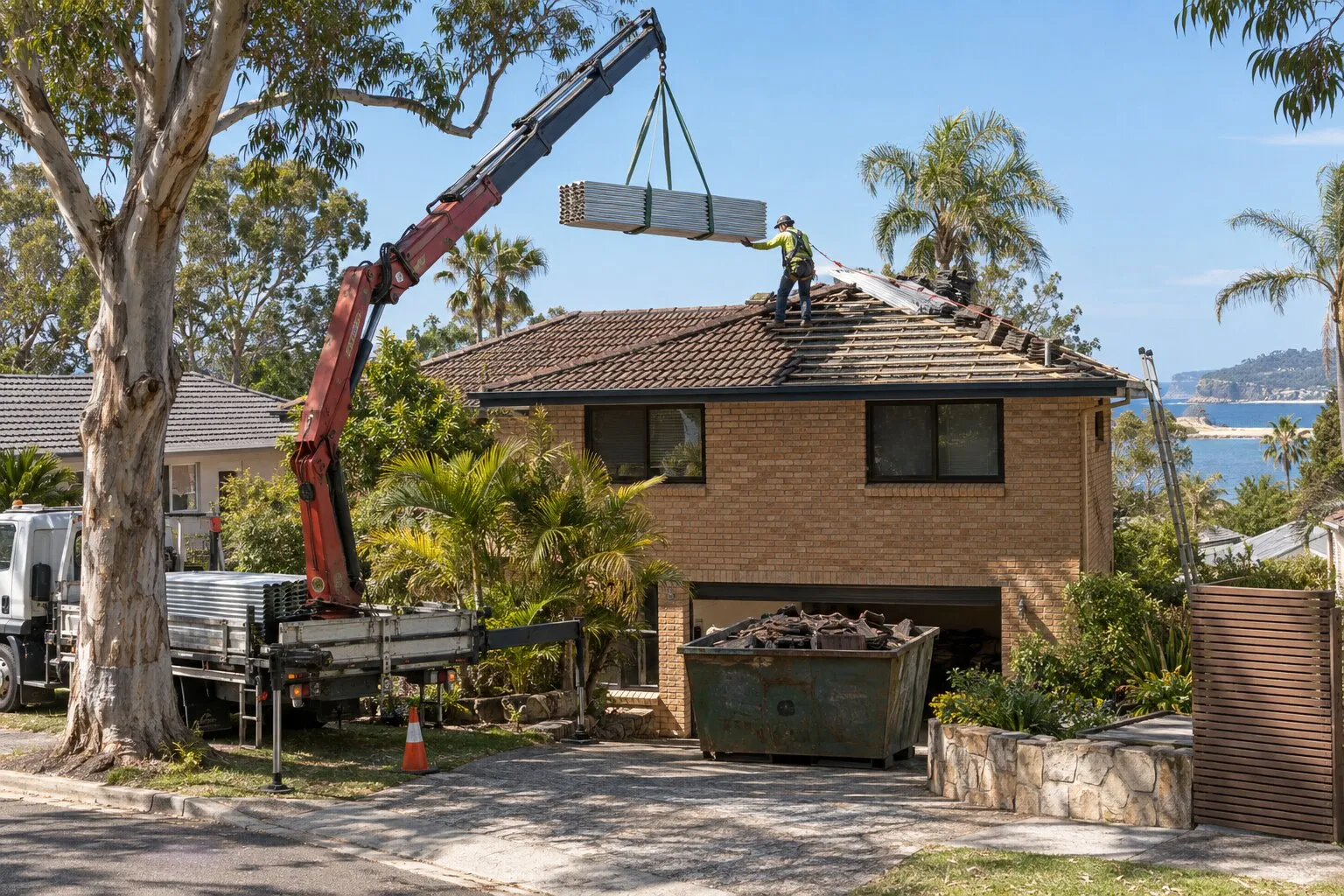
Sarking goes under the battens, so it can’t be slipped in from inside. On a tile roof the tiles and battens come off, the sarking goes on, and the tiles are re-laid. That’s why it’s usually done during a re-roof, or one section at a time where a roof keeps leaking. On a metal roof the sheets come off.
One Sydney contractor’s replacement page publishes this for doing a section:
Published price for re-laying a section with new sarking
| What’s charged | Published price | Who publishes it |
|---|---|---|
| Section repair: a section stripped, new sarking, tiles re-laid | $3,000 to $10,000 | Aussie Roof Repairs, Sydney (undated) |
One Sydney contractor’s roof replacement page, checked 1 October 2026. The page is undated and doesn’t say whether GST is included. Its Colorbond page says its “from $170” rate includes “removal of the old roof, new sarking, standard flashings and a corrugated profile”, with Klip-Lok or Trimdek profiles, two storeys and a pitch over 30° costing extra.
The same contractor’s re-roofing rates include “new sarking” in the price per square metre, which is one more reason to fold it into a roof replacement rather than pay for access twice.
Condensation under metal roofs
On a clear night a metal roof cools quickly, and warm, moist air from the house can condense on the underside of the sheets and drip onto the insulation and ceiling. It’s often mistaken for a leak because it shows up as drips with no rain.
The building code deals with this in the Housing Provisions, Part 10.8 (condensation management), which includes a clause on ventilating roof spaces with openings at the eaves and at or near the ridge. Fletcher Insulation’s technical bulletins say that clause applies only in climate zones 6, 7 and 8, so check with the roofer or building designer whether it applies to your house. The same bulletins describe vapour-permeable sarking for metal roofs, which lets moisture out rather than trapping it under the sheets. Ask which sarking the roofer plans to use, and why.
Whirlybirds: what they do and what suits the coast
A whirlybird is a wind-driven turbine over a hole in the roof. As it spins it draws hot, moist air out of the roof space, which helps with summer heat upstairs and with condensation. It works best with air coming in low down, at the eaves, to replace what goes out the top.
Check what it’s made of before one goes on a house near the surf. CSR Bradford’s WindMaster, for instance, has an aluminium turbine and flashing, a zinc-plated mild steel shaft and stainless steel and galvanised screws. The manufacturer lists it for tiled roofs from 15° to 45° and metal roofs from 3° to 45°. Salt attacks the steel parts and fixings first, and BlueScope’s coastal guidance on screws applies to them as it does to the rest of the roof (see steel roofs near the coast).
A rattling or wobbling whirlybird usually needs a new bearing or refixing, and a drip around its base is a flashing problem. Both are small roof repairs.
A new hole in the roof
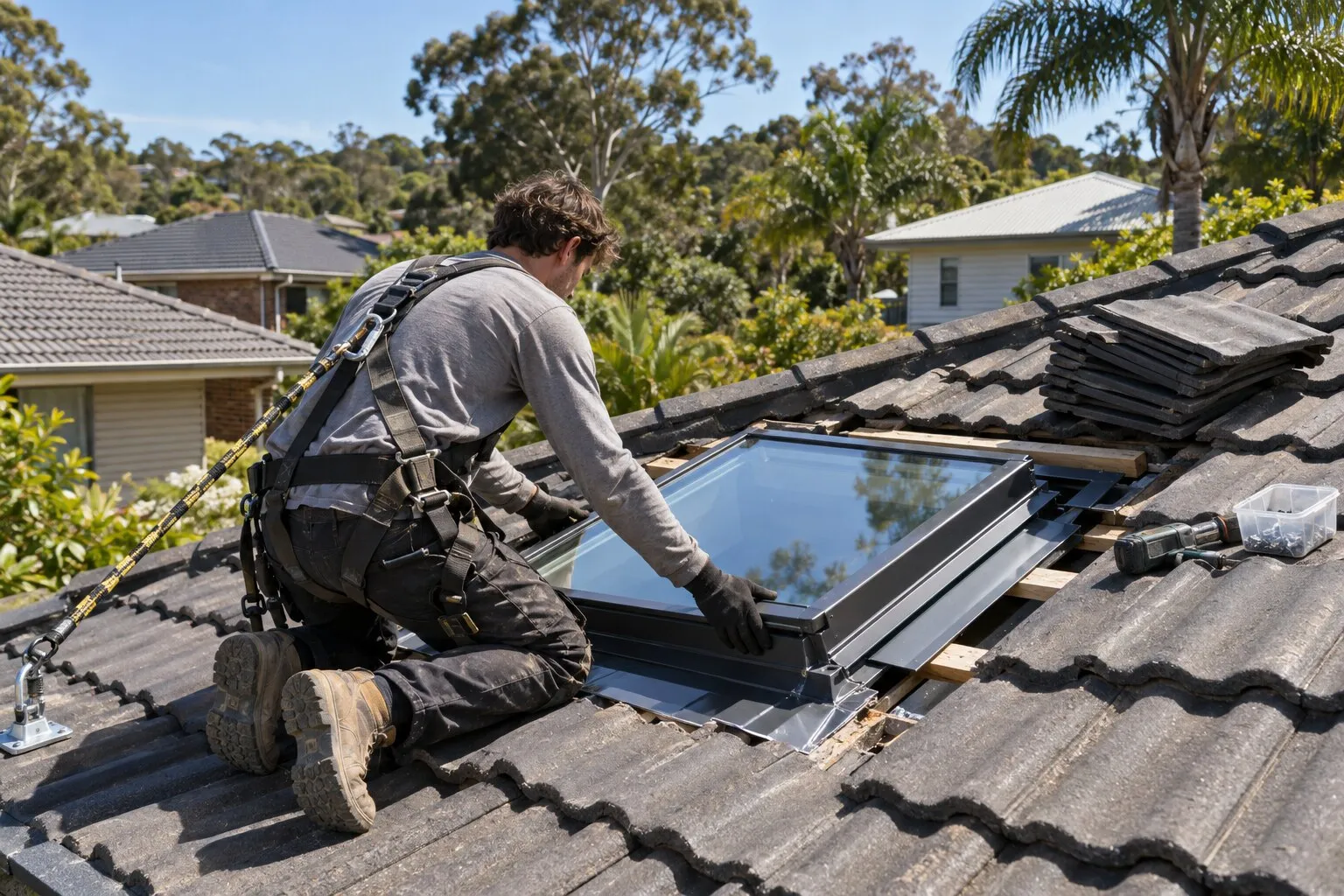
NSW’s exempt re-roofing rules (Codes SEPP clause 2.54) say the work must “not comprise the making of, or an alteration to the size of, any opening in a wall or roof, such as a doorway, window or skylight”. Ask the roofer or council how a new ventilator is treated for your house, particularly on heritage or bush fire prone land.
Sarking and vents on bush fire prone land
Parts of the Beaches border Ku-ring-gai Chase and Garigal national parks, and Northern Beaches Council’s bush fire prone land map covers many homes near the bush. On mapped land, sarking is a fire rule as well as a weather one. NSW’s Planning for Bush Fire Protection 2019 varies the national standard so that, for BAL-12.5 to BAL-40, any sarking used must “be non-combustible; or comply with AS/NZS 4200.1, be installed on the outside of the frame and have a flammability index of not more than 5 as determined by AS 1530.2”.
CSIRO’s best-practice guide adds a caution: “Do not assume that conventional sarking (even level 5 rated) is an ember or flame barrier in a combustible roof cavity.” For vents, Bradford sells a BAL version of its whirlybird “rated for use up to BAL 40 when installed to specification”. Your BAL certificate or bush fire consultant sets what applies to your house; the BAL roofing requirements checker summarises the NSW rules for each level.
Who can fit sarking and whirlybirds
In NSW the roof tiling licence covers sarking and battens, and both the roof tiling and roof plumbing licences include putting in skylights and ventilators. A contractor licence is needed for work valued at more than $5,000 in labour and materials, including GST. Check it on the Service NSW licence register.
Common questions
What is roof sarking?
A foil-faced membrane laid over the rafters and under the battens. It catches water and dust that get past the tiles or sheets and reflects some of the sun’s heat. Monier calls it “a type of foil lining for your roof” and recommends it for all roof types.
Is sarking required under roof tiles?
It depends on the pitch and, on bush fire prone land, the BAL. Monier’s tile pages give a minimum pitch of 15° with sarking and 20° without, and Monier recommends sarking even above 20°. On bush fire prone land, NSW rules set what sarking must be used for BAL-12.5 to BAL-40.
Can sarking be added without replacing the roof?
Only by lifting the tiles or sheets and battens, then re-laying them. One Sydney contractor publishes $3,000 to $10,000 for stripping a section, laying new sarking and re-laying the tiles. That’s why most people add it during a re-roof.
Do whirlybirds work?
They move hot, moist air out of the roof space when the wind blows, and work best with air coming in at the eaves. They help with roof-space heat and condensation. They don’t replace ceiling insulation.
Do whirlybirds leak?
A well-flashed whirlybird shouldn’t. Leaks around one are usually from a lifted or corroded flashing, or loose screws, and are a small repair. On the coast, ask what the turbine, shaft and screws are made of.
Where this information comes from
The prices, rules and advice on this page come from these published pages, checked on 1 October 2026 (prices and NSW rules) and 12 October 2026 (manufacturers and building code).
- Monier: FAQs · Roof tile manufacturer, page updated 22 September 2026
- Monier: Elabana concrete roof tile · Roof tile manufacturer, product page modified 10 November 2025
- Monier: Marseille terracotta roof tile · Roof tile manufacturer, product page modified 10 November 2025
- Aussie Roof Repairs: roof replacement Sydney · Sydney roofing contractor (Oatley), undated
- ABCB Housing Provisions (NCC 2022), Part 10.8: condensation management · Australian Building Codes Board, NCC 2022
- Fletcher Insulation TB08: condensation management, ventilation of roof spaces · Insulation manufacturer technical bulletin, 23 May 2024
- Fletcher Insulation TB-11: condensation management considerations for ventilation of roof spaces · Insulation manufacturer technical bulletin (NCC 2025), 15 April 2026
- CSR Bradford: WindMaster and WindMaster BAL roof ventilators · Roof ventilator manufacturer, product page, undated
- BlueScope TB-1A: steel roofing products selection guide · Manufacturer technical bulletin, March 2023, revision 14
- Lysaght PAB04: fasteners · Manufacturer product advisory bulletin, January 2024
- NSW RFS: Planning for Bush Fire Protection 2019 · NSW Rural Fire Service, adopted 1 March 2020
- CSIRO: Bushfire best practice guide, roofs (new builds) · CSIRO guidance, page modified 10 October 2021
- State Environmental Planning Policy (Exempt and Complying Development Codes) 2008, clauses 2.53 and 2.54 · NSW planning law: minor external building alterations, including roof cladding
- Northern Beaches Council: bush fire prone land · Local council guidance; map certified 7 August 2020
- NSW Government: roof tiling work licence · NSW Fair Trading licence page, updated 23 June 2026
- NSW Government: roof plumbing work licence · NSW Fair Trading licence page, updated 23 June 2026
- Service NSW: check a trade licence · NSW Government licence register