The short answer
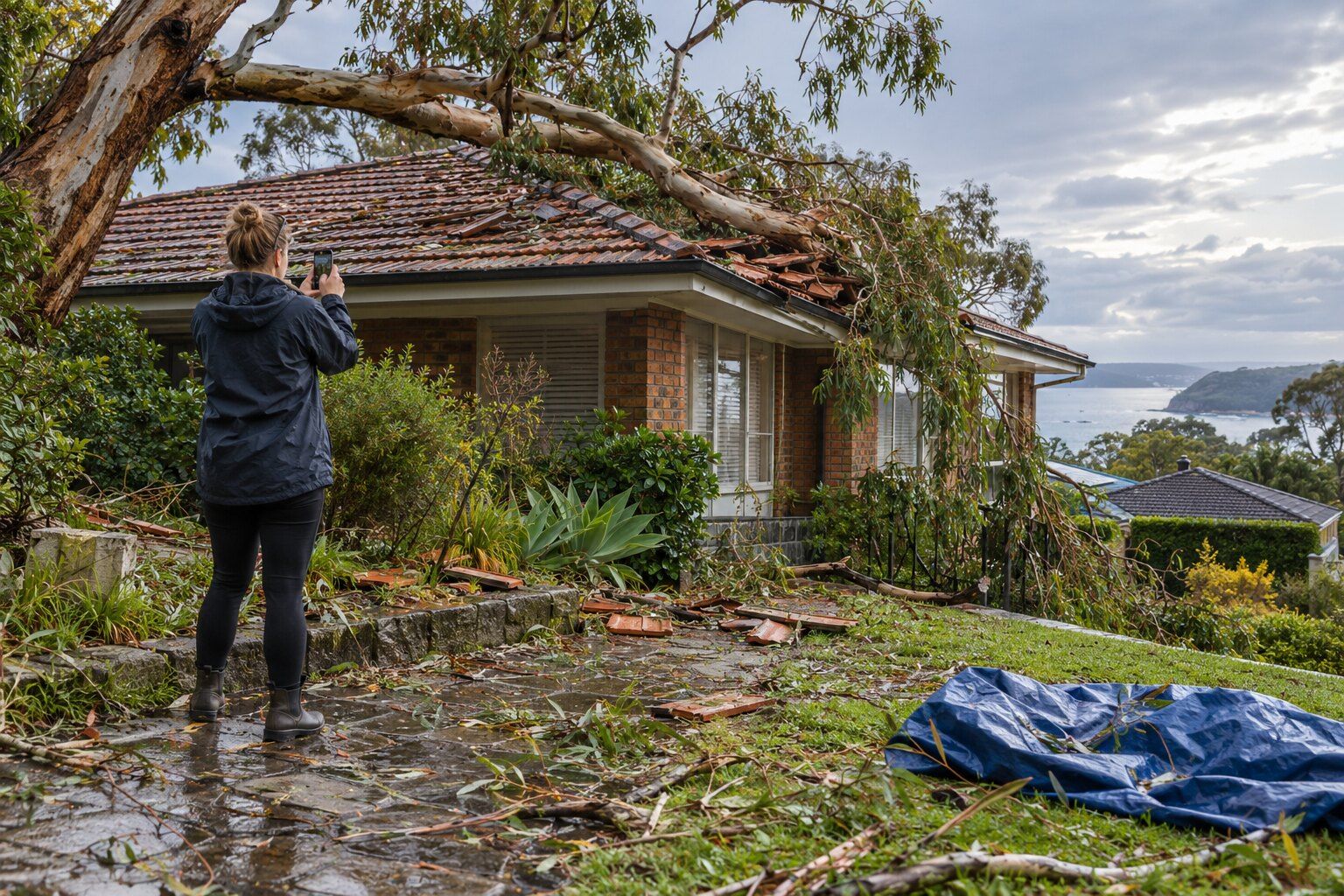
Usually yes for storm damage, and often no for a leak from a worn-out roof, but only your policy and insurer can say. Moneysmart says “Most home insurance and contents insurance cover storms”, including strong winds and rainwater. AFCA, the complaints authority, says wear and tear is “generally excluded”, and that what counts is the dominant cause of the damage. If an insurer relies on an exclusion, AFCA says “the insurer must show the proximate cause of the loss was the excluded event.” Photograph everything before it’s moved, contact the insurer early, and talk to them before paying for temporary repairs.
Storm damage or wear and tear?
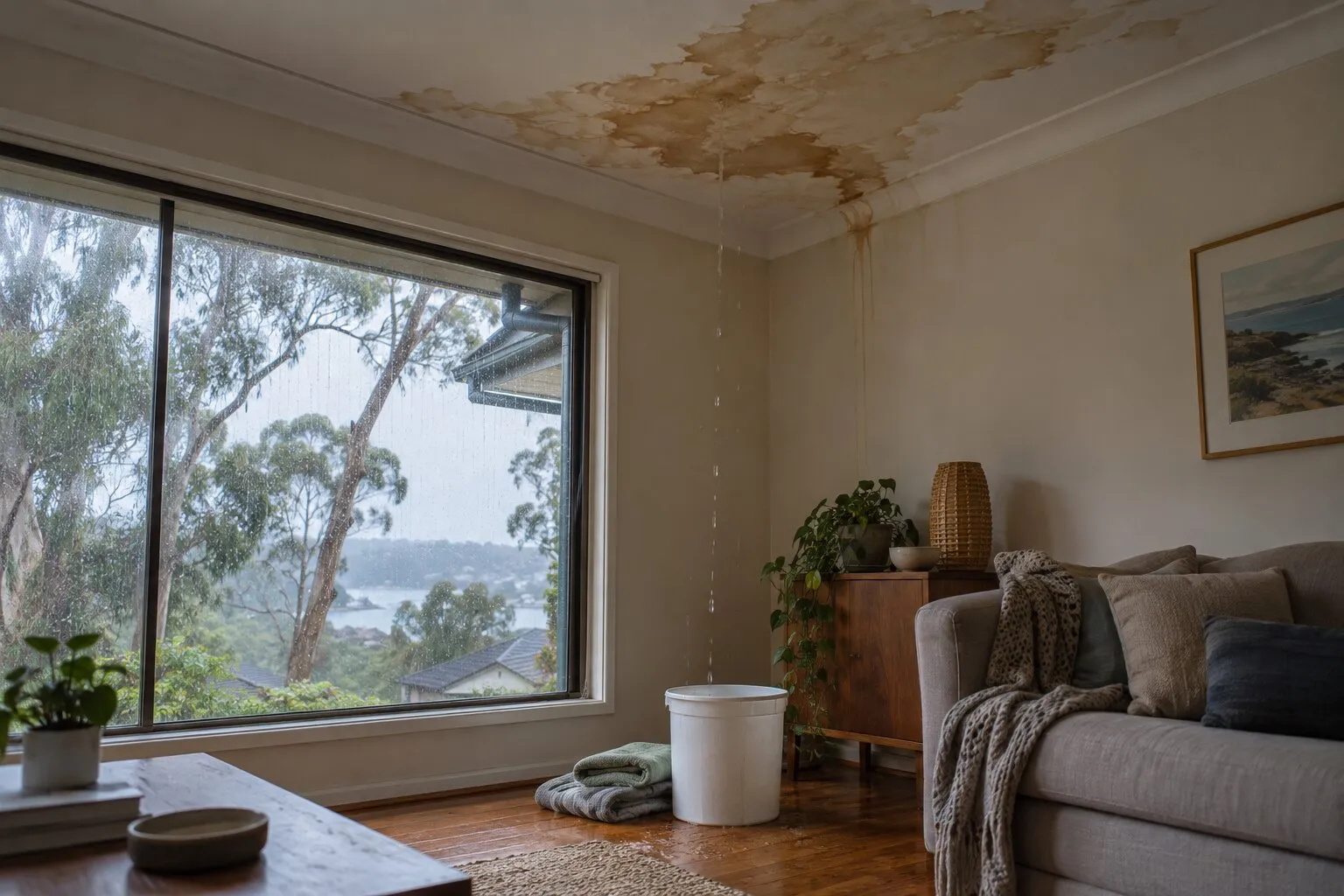
Moneysmart, ASIC’s consumer website, says most home and contents policies cover storms, listing lightning, cyclones, strong winds, rainwater, hail and snow. A branch through the tiles in a southerly or sheets lifted in an east coast low is the clear case.
A leak from cracked pointing, rusted-through valleys or a gutter that’s been blocked for years is the other case. AFCA’s published approach describes wear and tear as “generally excluded”. Many claims fall in between: an old roof that a storm finally broke.
How the cause is decided
AFCA’s approach to these disputes turns on the proximate cause: “the dominant, effective or operative cause” of the loss. The case it gives is a storm branch that damages a roof and lets water in: “The proximate cause of the damage is the storm.” Where the insurer says an exclusion applies, “the insurer must show the proximate cause of the loss was the excluded event.” In one case AFCA describes, expert evidence was that a storm contributed to the loss, the insurer couldn’t show other factors were the proximate cause, and it was liable.
Rainwater, stormwater and flood
The words in your policy matter. Moneysmart says “Rainwater is usually defined as water that falls from the sky”, and that storm cover usually includes run-off that collects in normally dry areas and rainwater overflowing from stormwater drains. Flood is defined separately, as “The covering of normally dry land by water that has escaped or been released from the normal confines of” a lake, river, creek, reservoir, canal or dam, and some homes pay more for it or have it excluded.
For a roof, water coming through the ceiling in a storm is usually a rainwater and storm question, not a flood one. Check the product disclosure statement (PDS): Moneysmart says, “If you’re not sure what cover you have, ask your insurer or read your policy’s product disclosure statement.”
What to do straight after the damage
Safety first: keep away from sagging ceilings and wet light fittings, call Triple Zero (000) if life is at risk and the NSW SES on 132 500 for storm damage. Then, from Moneysmart’s claim steps:
- Photos and video first. “take photos and videos of the original damaged state” before anything is moved, cleaned or repaired.
- Contact the insurer early. “Contact your insurer as soon as practical after the event happens.” Some policies have time limits for lodging a claim. The NSW SES says the same: “contact your insurer as soon as possible to lodge a claim.”
- Ask before paying for a tarp. “Talk to your insurer before you spend money on temporary repairs after an incident.” Moneysmart says insurers may arrange emergency work such as a roof tarp themselves.
- Ask the key questions: your excess, what’s included and excluded, and whether you can use your own repairer or take a cash settlement.
Our own advice: note the date and time of the storm, keep damaged materials if you can do so safely, and keep every invoice. Roof leaking? What to do first walks through the first hour.
What the roofer’s report should say
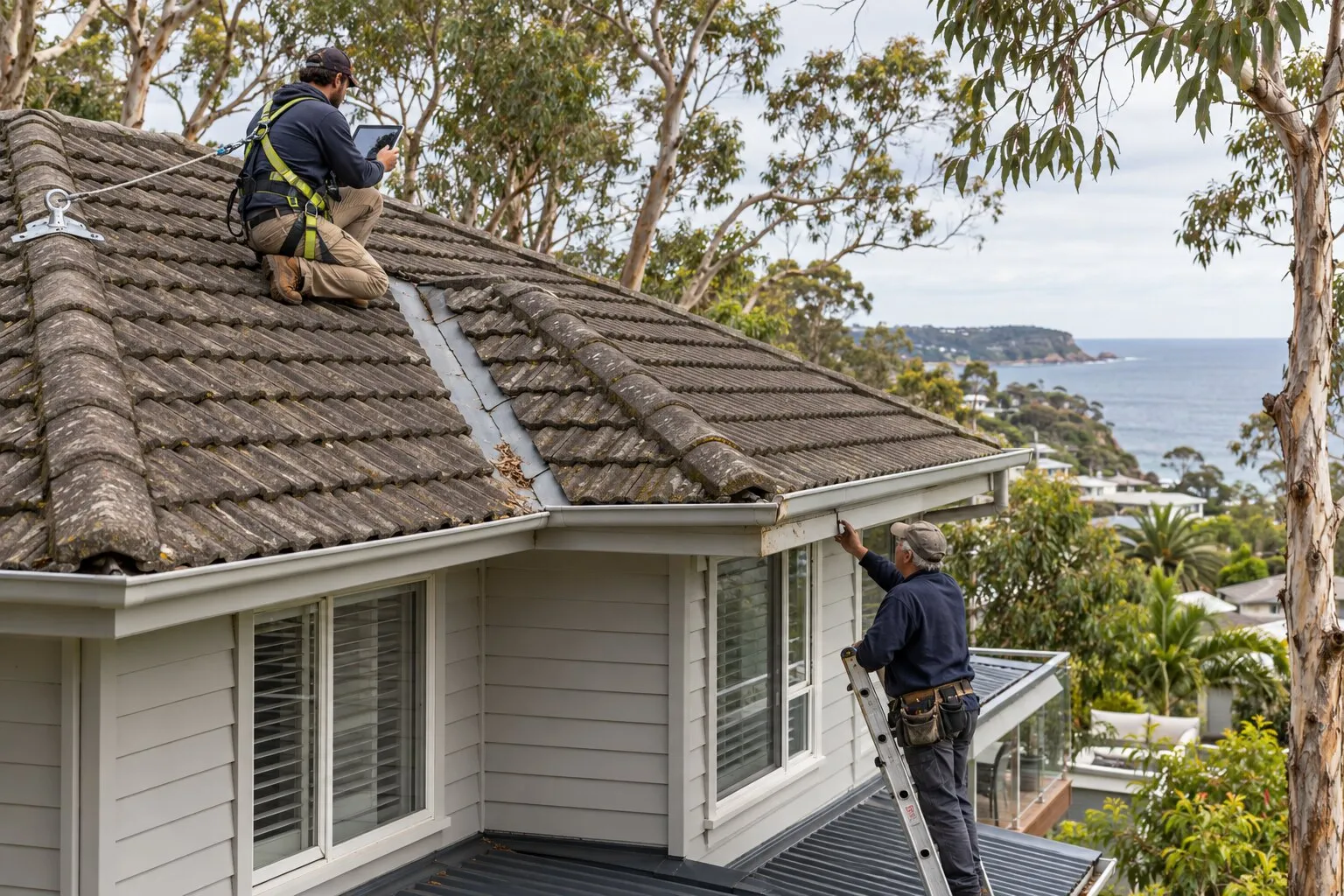
Insurers often send their own assessor, and Moneysmart says you should be told within 5 business days if a loss assessor or adjuster is appointed. A report from your own roofer can still help, especially where the cause is in question. This is our advice on what to ask the roofer to record:
- Dated photos of the damage on the roof, not just the ceiling
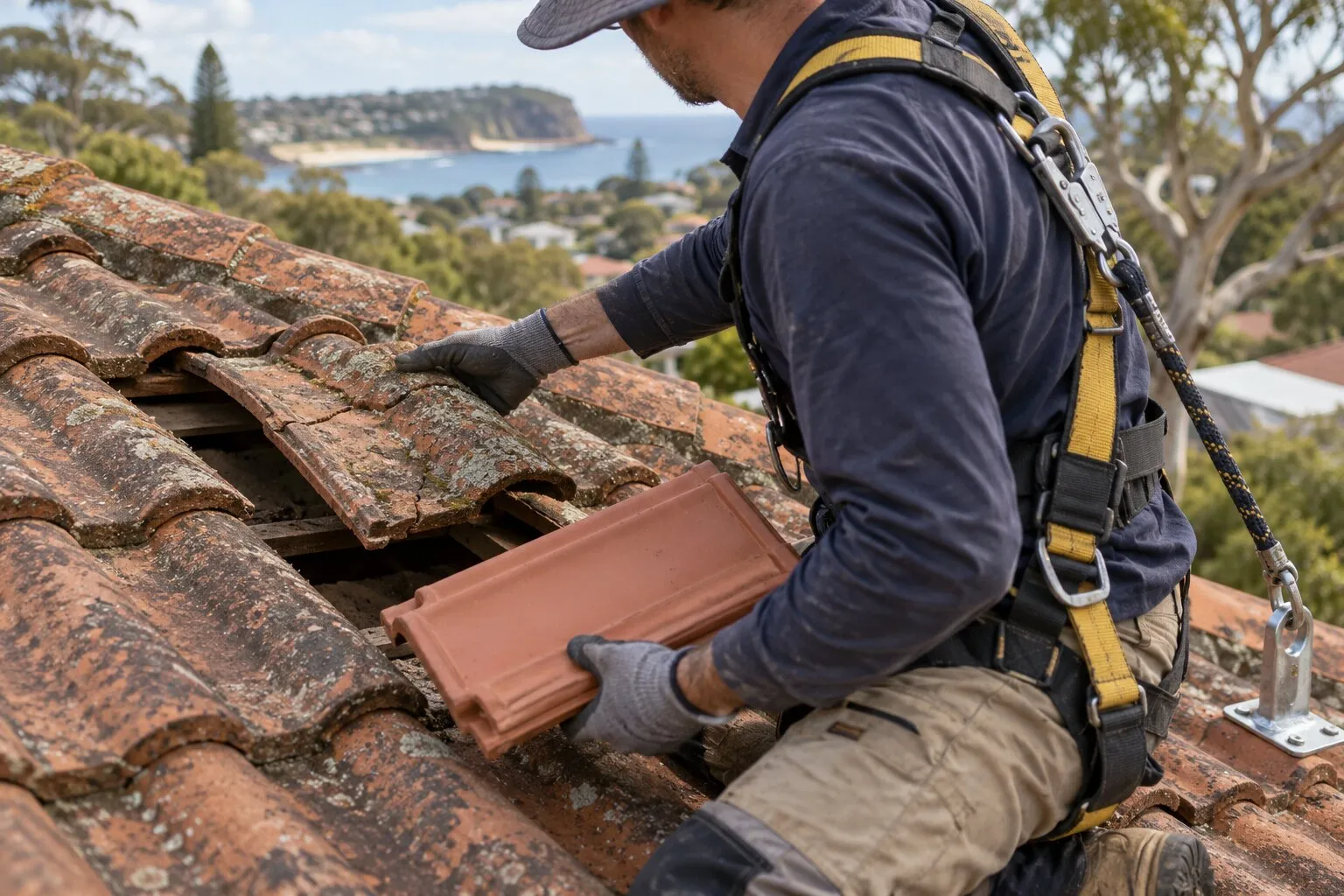
- What they think caused it, and why: lifted or broken tiles, a branch, sheets peeled back, an overflowing box gutter
- The roof’s general condition around the damage, so the report deals with age and wear honestly
- What they did to make it safe, and what the permanent repair needs
Roof work worth more than $5,000, including GST, needs a licensed roofer and a written contract in NSW. If the insurer manages the repair, Moneysmart says to check the written scope of works, including the materials and anything you have to pay for. If you take a cash settlement, “you are responsible for managing the repair or rebuild process yourself.”
How long the insurer has to decide
If your insurer subscribes to the General Insurance Code of Practice, Moneysmart sets out these timeframes:
- “your insurer will respond within 10 business days”, including any request for more information
- progress updates “at least every 20 business days”
- a decision “within 4 months of receiving the claim”, with some exceptions
- if the claim is denied, the reasons in writing, and you can ask for copies of the reports relied on
If the claim is refused
Moneysmart says “You can complain to your insurer if you are not satisfied with how your claim is progressing.” Start with the insurer’s internal complaints process, in writing, with your photos and the roofer’s report. If that doesn’t resolve it, the Australian Financial Complaints Authority (AFCA) handles complaints about insurers; its published approach on the cause of damage, quoted above, is the framework it applies to storm-versus-wear disputes.
After a natural disaster, Moneysmart says you may ask for a review within 12 months of the claim being finalised, even if you accepted a settlement, if you believe the assessment was incomplete or inaccurate.
Common questions
Does home insurance cover a leaking roof?
It depends on the cause and your policy. Storm damage, including rainwater, is usually covered; Moneysmart says most home and contents policies cover storms. Leaks from wear and tear or lack of maintenance are generally excluded, AFCA says. Only your insurer can say for your policy.
Is storm damage to a roof covered by insurance?
Usually. Moneysmart lists strong winds, rainwater and hail among the storm events most policies cover. Check your product disclosure statement for the definitions and exclusions, and contact your insurer as soon as practical.
Should I get the roof tarped before the insurer sees it?
If water is getting in, the house needs protecting, but Moneysmart says to “Talk to your insurer before you spend money on temporary repairs”, and insurers may arrange a roof tarp themselves. Photograph the damage before anything is covered. See emergency roof repairs.
How long does an insurer have to decide a home insurance claim?
Under the General Insurance Code of Practice, as Moneysmart summarises it: a response within 10 business days, updates at least every 20 business days, and a decision within 4 months of receiving the claim, with some exceptions.
What if my insurer says the damage is wear and tear?
Ask for the reasons and the reports in writing. AFCA says the proximate cause is the dominant cause, and that where an insurer relies on an exclusion it must show the excluded event was the proximate cause. Complain to the insurer first, then AFCA if it isn’t resolved.
Where this information comes from
The prices, rules and advice on this page come from these published pages, checked on 1 and 12 October 2026.
- Moneysmart: storm, flood and fire insurance · ASIC’s consumer website, updated 18 August 2026
- Moneysmart: how to make a home insurance claim · ASIC’s consumer website, updated 18 August 2026
- AFCA: the AFCA Approach to proximate cause of damage · Australian Financial Complaints Authority, April 2022
- NSW SES: prepare your home · NSW State Emergency Service guidance
- NSW SES: during a storm · NSW State Emergency Service guidance, undated
- Northern Beaches Council: East Coast Low, get prepared · Local council news item, 2 July 2025
- NSW Government: guide to providing home building contracts · NSW Fair Trading guidance, updated 11 June 2026
- NSW Government: roof tiling work licence · NSW Fair Trading licence page, updated 23 June 2026
- NSW Government: roof plumbing work licence · NSW Fair Trading licence page, updated 23 June 2026